
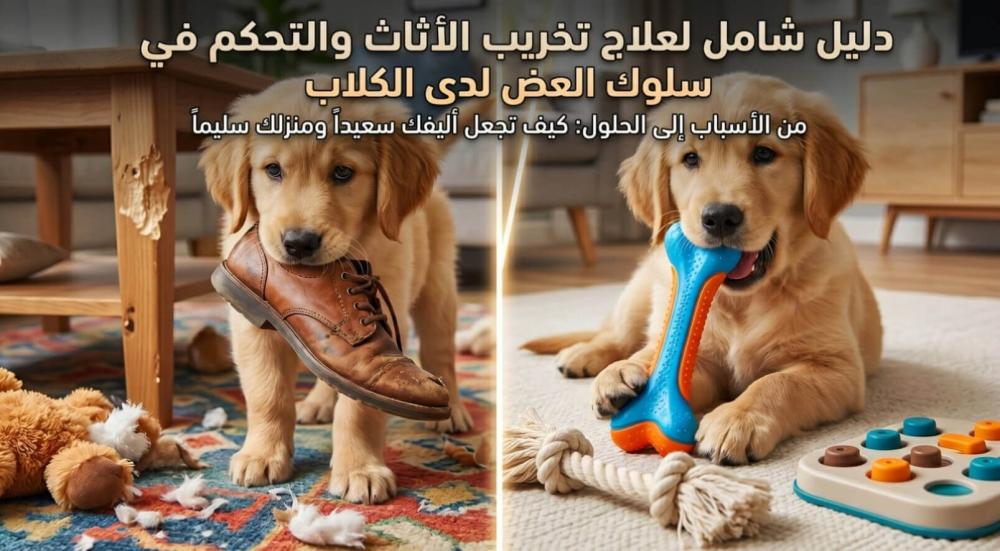
If you've ever walked into your living room to find tiny white snowflakes scattered across the floor from your sofa cushions or your favorite shoes turned into a rough chew toy, you're not alone. Chewing is one of the most common (and bizarre) behaviors dog owners encounter, but the good news is that destructive chewing isn't a permanent habit. With a little patience, the right tools, and a good understanding of why your dog chews things, you can stop this behavior and keep your home clean and tidy.
Why does the dog bite things?
Why does the dog chew on furniture in the first place?
Before you can solve the problem, you need to understand it. Dogs don't chew things maliciously; they chew them because they are fulfilling a natural need.
Dogs chew on things to explore:
Dogs use their mouths in much the same way that children use their hands. They put everything in their mouths—shoes, socks, remote controls, pillows—because they are learning about the world.
It relieves the pain of dogs losing their teeth:
Just like babies, puppies go through a painful and uncomfortable phase when their permanent teeth come in. The process of losing a puppy's teeth usually begins between 3 and 6 months of age. During this time, the puppy experiences intense itching and pain in its gums and finds no other way to relieve this discomfort than by biting.
Do not completely prevent the puppy from biting, but provide it with a safe alternative that will help it during this transitional phase.
Adult dogs chew things out of boredom:
If you leave your dog for long periods without mental or physical stimulation, your home will turn into an experimental field for him. When we notice that the dog is chewing on furniture or carpets, it is often a distress call resulting from boredom. Chewing releases hormones that help the dog relax, so he resorts to it as a recreational activity.
Releasing the dog's pent-up energy:
Dogs are very active creatures, and their physical needs vary from breed to breed. If your pet does not get enough walking and playing, it will look for an outlet for that energy.
Does biting behavior differ according to breed, age, or species?
We cannot generalize biting behavior to all dogs equally, as there are biological and genetic factors that play a pivotal role in it:
the age:
The most influential factor is that puppies bite to explore their surroundings (their mouths being their primary tactile tool) and to relieve the pain of teething. Adult dogs, however, often bite as a behavior stemming from anxiety or a lack of stimulation.
Breed:
The desire to bite and chew varies depending on the purpose for which the breed was bred. For example, retriever breeds (such as Golden Retrievers) and working dogs (such as German Shepherds) have a strong innate instinct to use their mouths, making them more likely to chew things if the dog's energy is not channeled through sturdy chew toys. In contrast, small breeds may be less destructive to furniture but are more prone to "pecking" or a simple nip at fingers.
Gender (male or female):
There are no major scientific differences in the biting instinct between the sexes, although unfertilized males may sometimes exhibit more violent destructive behaviors due to impulsivity related to control or the search for attention, while this behavior may increase in females during periods of hormonal changes if they do not have a suitable alternative to relieve their tension.
How to stop destructive chewing for good:
One of the most effective and reliable strategies to prevent your dog from chewing things he shouldn't be chewing.
Provide plenty of things that are allowed to be chewed:
Dogs definitely chew. The secret is in giving their teeth what they deserve.
Great options for chew toys include:
Zolux Bone-Shaped Rubber Dog Toy 14cm
Seven Birds Chew Toys for Cats, Rope, and Suitable for Dogs
Flamingo chocolate-scented chew bone
Bosch cylindrical plastic chew toy
Exercise with your dog:
A tired dog is a well-behaved dog.
Many chewing problems disappear when the dog's energy is gone and it gets enough physical and mental activity.
Based on age and breed, target the following:
- Puppies: 20-30 minutes of play, several times a day
- Adult dogs: at least 45-60 minutes of exercise
- Active strains: 90 minutes or more daily
Walking, fetching, tug-of-war, puzzle games
Seven Bird Colorful Balls for Dogs and Cats
Seven Bird Automatic Ball Launcher Dog Toy
Make your home safe for your puppy or dog:
If your dog can reach it, it will likely chew it.
Keep these things out of reach:
- shoes
- phone chargers
- Children's games
- pillows
- Books
- socks
- TV remote controls
How does the Seventh Bird store address the reason why dogs chew on things?
At Seventh Bird, we don't just sell products; we offer complete solutions to ensure your pet's happiness and your home's safety. We've carefully designed our range to address the root cause of dog chewing by providing:
Training rewards and incentives:
Because training is the basis of behavior modification, our store provides healthy treats that help you reinforce positive behavior in your dog, so that it learns to distinguish between what it is allowed to bite and what is forbidden.
Britt Puppy Treats with Chicken, Turkey & Pumpkin 80g
A selection of professional chew toys:
We provide toys made from ultra-durable natural materials, specially designed to withstand strong dog jaws and help puppies during the teething stage by massaging the gums and relieving pain.
Seven Bird Chewable Dog Weights Toy with Balls
Seven Bird Chewable Cushion Pull Dog Toy
Seven Birds Cat and Dog Toy with Teether
Dog energy-releasing tools:
From high-end tennis balls to sturdy rope toys, we help you channel pent-up energy into healthy physical activity, reducing the likelihood of your dog chewing on furniture or shoes.
Seven Bird Automatic Ball Launcher Dog Toy
Seven Bird Colorful Balls for Dogs and Cats
Cleaning and protection solutions:
- A padded nylon muzzle is a safe and comfortable option for guiding and protecting your pet during walks.
Ideal for training and outdoor activities, this muzzle is an essential tool to ensure your dog's well-being.
Benefits of a muzzle if the dog chews on furniture:
- Prevent direct access
- Breaking the vicious cycle of biting
- Change the dog's focus
- Promoting alternative behaviors
Important points when using a face mask:
- Masks are not a permanent solution
- Choosing the right face mask
- Gradual use
- Professional consultation
Nobleza dog muzzle made of durable nylon for guidance and protection
- Anti-bite spray for dogs is one of the most effective and easiest solutions for modifying your pet's /span>
1- Protecting furniture and sensitive property:
This product is a precise, targeted solution. You can spray it on:
The edges of sofas and carpets.
Electrical cables (to protect the dog from electrocution).
Shoes and clothing.
The wooden legs of the tables that the dog prefers to chew on the furniture.
2- A safe teaching method (without reprimand):
Instead of yelling at or scolding the dog, the spray provides silent discipline. The dog will learn on its own that certain things in the house are not suitable for chewing, reducing tension between owner and pet and making the training process more positive.
3- Supporting the dog's teething phase:
When a puppy is looking for anything to soothe its itchy gums, the spray can help deter it from your belongings. Pro tip: If the spray gets on furniture, immediately offer your dog a nice-textured alternative chew toy so it learns that the fun is in the toy, not the wooden table.
Seven Bird Anti-Chew Spray for Dogs
in conclusion:
It's important to remember that understanding why your dog chews is key to finding a solution, not punishment. Whether your pet is teething or trying to release excess energy, your role as a pet owner is to provide appropriate alternatives. Using smart tools like durable chew toys or deterrent sprays will help protect your home from furniture chewing and give your pet a healthy and balanced life.
Frequently asked questions:
When does the process of replacing a dog's teeth end and when does the dog stop biting?
This stage typically begins around 3 months of age and ends when all permanent teeth have erupted, usually around 6 to 7 months. During this period, it's essential to provide puppies with a chew toy to soothe their gums and prevent them from chewing on furniture.
Why does a dog chew on furniture even after it has passed puppyhood?
If a dog continues biting after reaching adulthood, the cause is often boredom or lack of physical activity. To address this, you should increase the frequency of exercise to help the dog expend energy and provide mentally stimulating toys to keep it occupied for extended periods.
Is bite prevention spray safe for dogs?
Yes, the sprays available at Seventh Bird store are formulated with a completely natural and safe formula. They do not harm the dog's health; they simply act as a deterrent to discourage it from damaging things.
What is the best quick solution when I see my dog biting something forbidden?
The best strategy is distraction and switching. Make a soft noise to get his attention, and as soon as he stops, offer him one of his favorite chew toys. When he starts chewing the toy, reward him so he knows this is the right behavior.
Does the severity of the bite differ between dog breeds?
Yes, some breeds with a strong hunting or herding instinct tend to use their mouths more. These need intensive energy channeling from a young age to ensure this instinct doesn't turn into destructive behavior in the home.
Read more articles from The Seventh Bird about:
Why do cats sleep in the sand? And how can this behavior be addressed?
Symptoms of toxoplasmosis: Your comprehensive guide to causes, treatment, and prevention
How many hours do cats sleep and when should you worry?
Cat vaccination schedule in Saudi Arabia 2026: Types, dates, and prices
The best vitamins for cats in 2026: A comprehensive guide to immune and coat health