
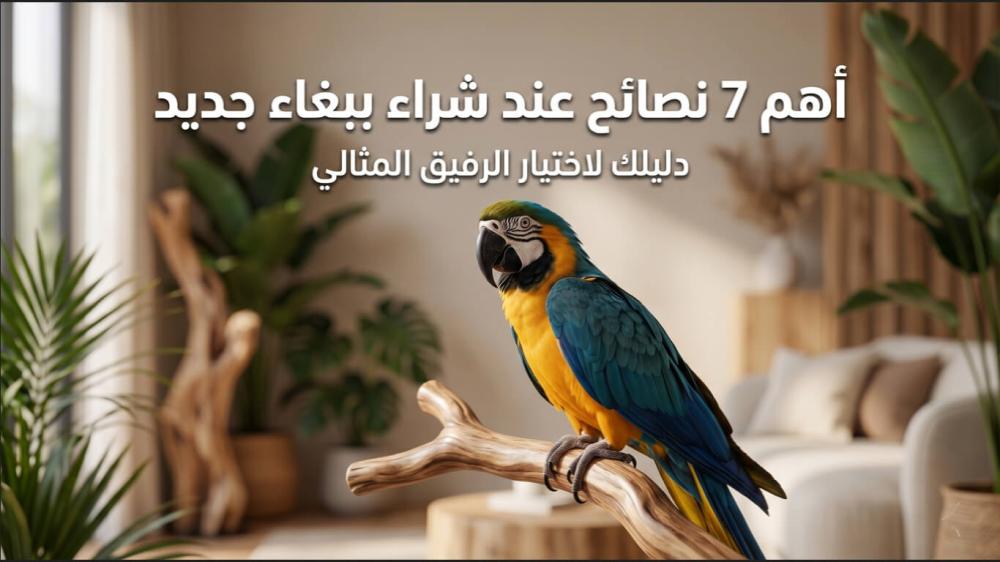
Owning a pet parrot is a wonderful addition to any home. They are not just ornamental birds, but intelligent companions that fill your life with joy and interaction. However, successfully raising these amazing creatures begins with the moment you make the right choice and understand the parrot's basic needs to ensure a healthy and happy life. Whether you aspire to own a Grey Parrot , renowned for its exceptional intelligence and ability to talk, or you are drawn to the luxurious and imposing Macaw with its captivating colors, there are essential steps you should know before making the purchase. In this article, we will share the most important tips when buying a new parrot , providing you with a comprehensive guide to make your journey into the world of birds an enjoyable and lasting experience.
Tips when buying a new parrot:
Deciding to get a pet parrot is a fun step, but it comes with a big responsibility. Parrots are very intelligent social creatures that need special care. If you are looking for the perfect companion, here are the most important tips when buying a new parrot:
Choose the type that suits your lifestyle:
Parrot species vary in their needs and personalities; it is essential to determine the species that best suits your time and budget.
African Grey Parrot:
If your goal is to own a bird with extraordinary mental abilities, then an African Grey parrot is your first choice.
A suitable lifestyle:
The African Grey parrot is suitable for people who spend a lot of time at home. The African Grey is a very sensitive bird and needs constant socialization, as prolonged isolation may lead to behavioral problems such as feather plucking.
Features:
An exceptional ability to pronounce sentences and imitate sounds with amazing accuracy.
Macaw parrot:
The macaw parrot represents the pinnacle of luxury in the bird world, but it requires a special kind of commitment.
A suitable lifestyle:
It needs very large spaces and huge cages, and its very loud voice may not be suitable for crowded apartments. It is ideal for families looking for a showbird with a fun and boisterous personality.
- Features:
Irresistible visual beauty and a very emotional personality towards its owner.
Small species (cockatiels or budgies):
Not all parrots require huge budgets or vast spaces. There are excellent options that fall under the category of easy-to-care-for-beginner birds, such as:
Cocktail :
Ideal choices for those who work medium hours outside the home, as they are relatively quiet birds and less demanding financially.
Budgie parrot:
It is characterized by its high activity level and good learning ability, and is very suitable for breeders who want a lively bird at a reasonable cost.
Checking the bird's health status:
When buying, don't just be impressed by the colors. Look for signs of health:
- Clean and tidy feathers.
- Bright eyes and obvious energy.
- Beak and legs free of excess scales.
- Make sure the bird is weaned and eating on its own.
Preparing the parrot's basic requirements:
Before the bird arrives home, all the essential supplies should be ready to receive it. This step is one of the most important tips when buying a new parrot ; don't leave the purchase to the last minute.
The cage :
It should be large enough for the bird to fully spread its wings; and you can choose from the [ spacious parrot cages ] we provide.
Dietary system:
Parrots do not rely solely on grains, but also need pellets, fresh fruits and vegetables.
Why are seed-only diets dangerous?
Following a diet based solely on seeds may lead to malnutrition, obesity, and liver problems.
A healthy diet for a parrot should include:
- Fresh vegetables (such as cabbage, carrots, and bell peppers)
- Fruits (such as apples and blueberries, served in moderation)
- Grains and sprouts
- High quality granules
- Seeds and nuts as snacks
A proper diet is essential for excellent parrot care.
Games:
Parrots are very intelligent creatures, and providing stimulating wooden toys prevents them from plucking their feathers.
A quiet and safe environment:
Parrots are very sensitive to smells and fumes. Avoid placing the cage in the kitchen because of the fumes from Teflon and strong cleaning products, which can be fatal to them. Make sure to place the cage in a lively area of the house where it can see its owners, but away from direct drafts (air conditioners).
Patience and building trust:
Remember that gaining the trust of a new pet parrot can take time. Don't try to handle it forcefully in the first few days; instead, start by talking to it calmly and offering treats from behind the cage until it gets used to your presence.
Golden advice:
Parrots live for many years (some reach 50 years or more), so consider it a new member of your family.
Family, not just a decorative piece.
Understanding parrot /strong>
Why do parrots close their eyes?
Have you ever noticed your parrot's pupils rapidly dilating and constricting? This phenomenon is called eye fixation, and it's a natural and fascinating behavior. Parrots fix their eyes when they are excited, curious, playful, or sometimes even when they sense danger. Understanding this body language can help you respond appropriately and build greater trust with your bird.
Reading body language:
Parrots communicate not only through their vocalizations but also through their feathers, posture, eye movements, and calls to express their feelings. Learning to recognize these subtle cues will help avoid misunderstandings and behaviors stemming from fear and biting.
Managing noise levels:
Parrots are naturally noisy animals, and while some noise is normal, excessive squawking often indicates boredom, stress, or a need for attention. Adjusting the parrot's environment, providing toys and entertainment, and maintaining a regular daily routine can help reduce unwanted squawking.
How much sleep does a parrot need?
Sleep is an essential part of parrot care. Parrots need 10-12 hours of uninterrupted, restful sleep each night. A sleeping cage or a cover can be used in a quiet, dark room to promote emotional balance and health.
Tips when buying a new parrot from Al-Ta'ir Al-Sabi':
At Seventh Bird, we believe that the relationship between the breeder and the bird is a friendship that lasts for years, so we put in your hands the essence of our experience to ensure a perfect start:
The first 48-hour rule:
We always recommend leaving the parrot in its new cage for at least two days without trying to touch it or take it out so that it can explore its surroundings and feel safe in its new home.
Dietary diversity is the secret:
Don't just rely on grains. At Seventh Bird, we offer fortified mixes specifically designed to meet the parrot's nutritional requirements, and we recommend incorporating leafy greens and fruits into 20% of its daily meals.
Regular check-up of the beak and nails:
Active parrots such as the African Grey parrot need specialized chew toys to keep their beaks healthy, and in our store we provide safe tools that help you care for the natural growth of its beak and nails.
Investing in the bird's intelligence:
Whether you choose a macaw or a smaller species, these birds' intelligence needs challenges. We recommend providing interactive toys that stimulate their problem-solving skills to prevent them from becoming depressed or lethargic.
The most important thing the seventh bird offers to the new parrot:
We understand that a good start saves you trouble, so we have gathered all the parrot requirements at Al-Ta'ir Al-Sabe' to ensure a smooth transition for your new friend:
Smart and spacious cages:
We provide cages in international sizes and specifications that suit the size of the Macaw parrot and the needs of the African Grey parrot. They are also available with modern and luxurious decorations that add a touch of elegance and beauty to your home.
Integrated dietary systems:
What is the right food for your new bird?
The seventh bird has the best types fortified with vitamins that ensure the shine of the pet parrot's feathers and support the health of its digestive system.
Your Parrot is a vitamin B-rich food supplement to boost immunity and feather health. 500g
Care and hygiene supplies:
From medical perches that protect birds' feet to feather care sprays and nutritional supplements, everything you need to care for your bird's health can be found under one roof.
in conclusion
In conclusion, owning a pet parrot is an investment in a unique emotional bond that develops day by day. Whether you choose the intelligence of an African Grey or the charm of a macaw , the key to success lies in a deep understanding of your parrot's needs and providing a stimulating environment. At Seventh Bird Shop, we are committed to being by your side every step of the way, offering the best advice when buying a new parrot and the finest products to ensure your winged friend has a happy and stable life.
Frequently asked questions:
1- How long does a Casco parrot live in a house?
The African Grey parrot is considered a long-lived bird, with an average lifespan in captivity ranging from 40 to 60 years if it is provided with healthcare and a balanced diet.
2- Does the macaw parrot need special care compared to other species?
Yes, due to its large size and powerful beak, macaws need heavy-duty cages and ample space to fly, as well as solid wooden toys to release their energy, which we provide in the parrot requirements section of our store.
3- What is the best age to buy a new pet parrot?
It is always preferable to buy a parrot at a young age, immediately after weaning, as it is easier to train, build a strong bond with the breeder, and is more able to adapt to the home environment.
4- What else does a parrot eat besides grains?
The ideal diet should consist of 60-70% of the allocated pellet , with the remainder distributed among fresh vegetables, fruits (in measured quantities), and some nuts as treats, while completely avoiding avocados and chocolate.
Read more articles from The Seventh Bird about:
Why do cats sleep in the sand? And how can this behavior be addressed?
Symptoms of toxoplasmosis: Your comprehensive guide to causes, treatment, and prevention
How many hours do cats sleep and when should you worry?
Cat vaccination schedule in Saudi Arabia 2026: Types, dates, and prices
The best vitamins for cats in 2026: A comprehensive guide to immune and coat health
Why do dogs chew on things? A comprehensive guide to repairing furniture damage.
The comprehensive guide to raising birds: How much do lovebirds cost in Saudi Arabia?