
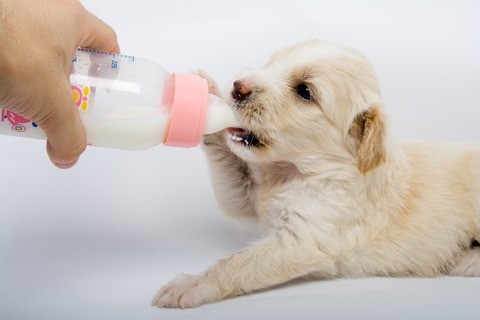
A substitute for mother's milk for a puppy should not be the first milk it receives, as the foundation is colostrum, the mother's milk at the beginning of lactation, which provides them with a large amount of nutrients and defenses, although this is not always possible. Sometimes, the death of the mother, her rejection, abandonment of the puppies, or other circumstances necessitate knowing how to proceed. We know that the first days of a puppy's life are crucial for its ability to face the world, and we cannot afford to waste any time.
breast milk
Before delving into the details of milk substitutes for dogs, it's essential to understand the importance of what a mother provides. Breast milk is vital for all newborn puppies of any breed, supplying all the necessary nutrients for their growth from day one. This food cannot be completely replaced, as it is the most complete and best source for meeting the needs of young puppies, adapting to their age.
Fortunately, the veterinary market offers infant formulas for these moments that cover all the needs of puppies, dogs, or kittens at this stage of life.
We need to clarify some basic concepts about milk and lactose: In recent years, lactose has come under a lot of scrutiny due to intolerance and/or allergies in people, leading some animal lovers to question its safety. However, lactose is simply a sugar found in the milk of all mammals and is essential for good nutrition.
In the intestines of puppies, the enzyme lactase is produced, which converts lactose into glucose and galactose, providing energy for the puppies' first few days. This enzyme disappears from the intestines as the puppies mature, and it is no longer necessary to continue feeding them milk as weaning approaches. This explains milk intolerance in adult puppies.
That's why we must respect the weaning age so that our puppy grows up as healthy as possible and does not face diseases throughout its life.
A substitute for breast milk in dogs:
Although there are many high-quality formulas on the market, the truth is that breast milk contains certain nutrients not found in any other substance. The first milk a puppy drinks should always be colostrum, which provides many nutrients and defenses from the mother, but this is sometimes not possible for various reasons.
The absence of the mother due to death or rejection of her puppies is one of the most frequent situations. Abandonment is also a reason why puppies are left without their mother's protection and care; therefore, we need to know how to act in these circumstances.
1- Artificial formula is an acceptable alternative for small dogs:
Artificial milk is a good option in these cases and can be purchased from specialist stores, but homemade artificial milk is an acceptable alternative for hungry dogs if they are in an emergency.
In the wild, the mother is the sole source of nutrients for her pups, and pups separated from her will starve if they don't receive help. Very large litters may also require supplemental feeding if their mothers are unable to produce enough milk, which is sometimes the case.
And we have provided you with the seventh bird :
Befar Lactol Milk Substitute for Puppies
Lactopet milk alternative for cats and dogs
Bioactive Milk Replacement Puppy Nutritional Supplement
2- Goat's milk:
Goat's milk is easier to digest than cow's milk and allows puppies to absorb vital nutrients without digestive upset.
And we have provided you with the seventh bird :
EGY SENSE Sterilized Goat Milk for Cats and Dogs
EGY SENSE Sterilized Goat Milk for Kittens and Small Dogs
EGY SENCE Silver Goat Milk Fortified with Calcium for Dogs and Cats
EGY SENCE Silver Sterilized Goat's Milk for Kittens and Dogs with Colostrum
And you may need the seventh bird :
Trixie bottle for feeding dogs and kittens
Befar Lactol Set: Baby Bottle with Cleaning Brush
The mechanism for feeding milk to puppies:
Before feeding the puppies, your veterinarian will need to advise you on how much and how often to feed them. The milk replacer you choose should be placed in a small animal bottle and warmed to body temperature in a container of hot water. Pour a small amount of the milk onto the pup to check its temperature; it should be warm, not hot.
You should hold the puppy upside down on a table or on your lap, to mimic the position it will take when nursing from its mother.
We, the seventh bird, suggest pet.code.clinic to you:
For the best treatment and the best service, you can get a free medical consultation via WhatsApp number 0544789504
Things to consider:
Since puppies nurse from their mothers several times a day, it's best to feed them every 3 hours, distributing their total daily calorie intake (in this case, 650 kcal/day) across several feedings. In a 24-hour period, if a puppy eats every 3 hours, it will need to be fed 8 meals a day, which will provide its total daily calorie needs. Therefore, this puppy in the example should consume 81.25 calories per feeding to reach 650 calories per day.
Gradually, the meals should be spaced out, and the best thing is that in the third week only 4 meals a day are made, i.e., every 6 hours, as other factors can also be added to the diet such as water and porridge.
What is a substitute for breast milk for dogs?
When it comes to feeding puppies, providing them with proper nutrition is crucial. While mother's milk is the ideal source of nutrition for newborn puppies, there are situations where a substitute may be necessary. If the mother is unable to produce enough milk or is unavailable, a commercially available milk replacer specifically formulated for dogs can be used as a substitute for breast milk.
It is important to note that cow's milk should not be used as a substitute for mother's milk, as it can cause digestive upset and may not provide the necessary nutrients for puppies.
Therefore, we have provided you with the seventh bird :
Befar Lactol Milk Substitute for Puppies
Lactopet milk alternative for cats and dogs
Bioactive Milk Replacement Puppy Nutritional Supplement
Do puppies drink milk?
Puppies, like all adult dogs, typically do not need to drink milk as part of their regular diet. Once puppies are weaned and stop nursing from their mothers, they no longer need milk as their primary source of nutrition.
Most adult dogs, including small breeds, are lactose intolerant. This means they lack the enzymes needed to properly digest lactose, the sugar found in milk. Feeding milk or other dairy products to lactose-intolerant dogs can lead to digestive upset, such as diarrhea, gas, and stomach discomfort.