
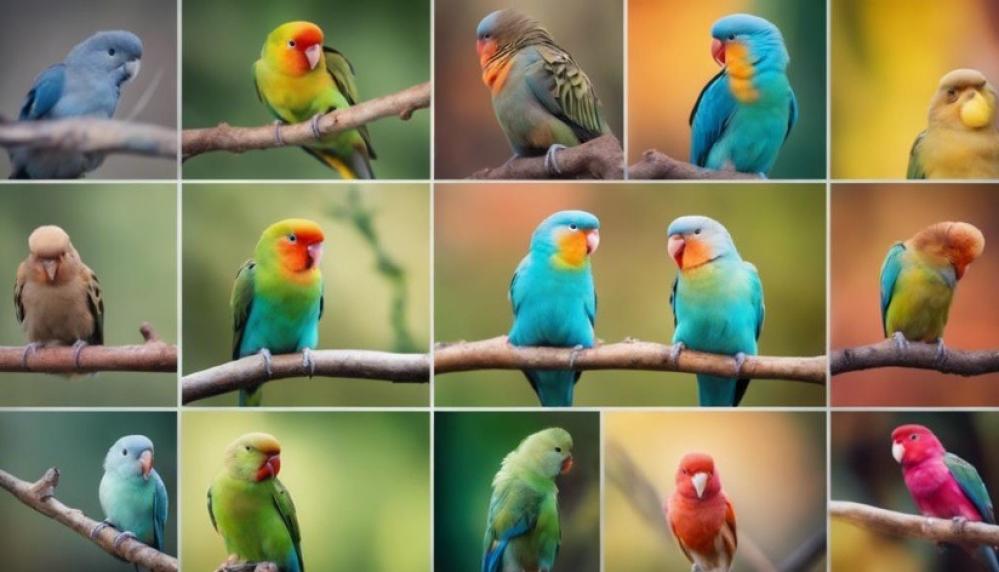
Lovebirds attract many enthusiasts due to their attractive colors and gentle social behavior, making them an ideal choice for keeping as pets. This article will introduce you to different types of lovebirds with clear pictures to help you distinguish between them. We will also answer a question that concerns every beginner: how much do lovebirds cost in Saudi Arabia, and what factors influence price variations?
What are the different types of lovebirds, with pictures?
There are different types of lovebirds, and in this section we will learn about the most important types of lovebirds with pictures…
ﻻ
1- Rosy-faced lovebirds:
Physical characteristics:
The pink-faced lovebird is distinguished by its vibrant peach-colored face and blue tail;
These birds are 7 to 8 inches long and have an average lifespan of 12 to 15 years.
Personal qualities:
It is a small, social bird known for its affectionate nature. These animals thrive in small groups and exhibit playful behaviors.
Care:
These birds need a spacious cage and interactive toys; use light sprays to keep their feathers clean.
Dietary system:
The diet of pink-faced lovebirds is mainly based on seeds. It is important for their health to avoid nuts. You can introduce fruits and vegetables to get a balanced mix.
2- Budgies:
Although budgies are among the most important types of lovebirds, with pictures showing that they belong to a technically different family, they are classified in Saudi stores as one of the main choices for small bird lovers.
Physical characteristics:
It ranges in size from 18-20 cm, is characterized by black lines behind the head and wings, and comes in an endless array of colors (blue, yellow, purple, white).
Personal qualities:
She likes to live in groups and communicates by chirping. With continuous training, she is able to learn to imitate sounds and music.
Care:
These birds need constant exposure to sunlight and regular bathing.
Dietary system:
You need a balanced diet of grains, vegetables, and fruits.
3- Masked Lovebirds:
One of the types of lovebirds with pictures, also known as the "Maslak" in some regions of the Kingdom, is one of the most beautiful types in appearance due to the strong contrast in its colors.
Physical characteristics:
It measures between 12.7-15 cm in length, has a dark black face resembling a mask, a bright coral red beak, a white ring around the eye, and a bright yellow chest.
Mutations: The blue masked type is the most in demand, with a sky-blue body, white chest, and black mask, giving it a unique royal appearance.
Personal qualities:
Affectionate, sociable, energetic, and can form a strong bond with its owner. It needs a companion of the same kind to avoid loneliness, or continuous interaction with its owners. Suitable for those looking for a special companion to improve their mood.
Care:
They need a large cage and constant interaction. Avoid rapid movements and noise around them. These birds are easily upset and may develop feather plucking disease as a result of stress.
Dietary system:
Give him a mixture that combines vegetables with seeds, and he also needs nutritional supplements.
4- Fisher's Lovebirds:
One of the types of lovebirds with pictures is a small parrot belonging to the genus *Parrotidae*. This species was originally discovered in the late nineteenth century. It was named after the German explorer Gustav Fischer.
Physical characteristics:
The smallest type of lovebird is characterized by attractive colors, a mix of orange, olive, and red, and the tail feathers tend towards blue.
Personal qualities:
A social animal that needs interaction and attention, making pleasant sounds that add joy to the home.
Care :
It needs a spacious cage to be able to exercise as it would in the wild, but be sure to monitor its appetite and activity; any change indicates illness and requires veterinary intervention.
Dietary system:
A diet rich in grains and seeds is needed.
How much do lovebirds cost in Saudi Arabia?
Lovebird prices in the Kingdom vary based on several factors, most importantly the species, age, color (mutation), and whether the bird is tame (trained) or for breeding. Here are the approximate average prices in Saudi Arabia:
Budgies:
The price of a pair (of walnuts) ranges between 180 and 220 riyals.
Lovebirds (Rosés):
The price of walnuts ranges from 250 to 300 riyals.
Trained pet birds: Due to the time spent training them, the price of one pet bird may reach 500 riyals.
Factors that affect the price:
- Season: Prices rise slightly during breeding seasons (winter and spring).
- Accessories: Sometimes the bird is displayed with its cage and accessories, which increases the overall value.
- Source: Buying from a breeder (local production) is often slightly more expensive than wholesale stores, but it ensures better health and immunity for the birds.
Tips on choosing the best food for lovebirds:
Diversification between grains and seeds:
Grains such as millet, canary seed, and spelt form the basis of any lovebird diet, but relying on them alone can lead to obesity or vitamin deficiencies. Therefore, be sure to buy ready-made mixes that contain balanced proportions.
Adding soft foods:
To promote vitality, weekly meals should include leafy green vegetables such as rocket and lettuce, and small pieces of apple (without seeds) that provide birds with necessary fluids and fiber. Provide food containing a mixture of vegetables and fruits .
Reliance on manufactured pellets:
Experts recommend incorporating pellets into the diet. These are compressed pellets containing concentrated minerals and vitamins that prevent the bird from selectively choosing only its favorite grains, thus ensuring it receives complete nutrition.
Providing a constant source of calcium:
The diet of lovebirds is not complete without the presence of cuttlebone (cuttle) inside the cage on a continuous basis, as it is very necessary for bone health, and especially for the female during the egg-laying period.
Clean, renewable water:
Birds need fresh water daily, and it is preferable to add drops of liquid vitamins specifically for birds to the waterer once a week to boost immunity, especially during weather fluctuations.
How do you care for lovebirds in Saudi Arabia?
Caring for lovebirds in the Saudi Arabian environment requires special attention due to the desert climate and temperature fluctuations between summer and winter. To maintain the health of lovebirds, the following points should be considered:
Temperature management:
- In the summer: Temperatures in Saudi Arabia reach record highs, so the cage should be placed in an air-conditioned room with a moderate temperature (between 22 and 25 degrees Celsius). Be careful not to place the cage directly in front of the air conditioner's draft, as the direct cold can cause the birds to catch a potentially fatal cold.
- In winter: Avoid leaving birds on balconies or in open spaces at night, as temperatures drop sharply, which may expose them to heat stress.
Bathing and moisturizing:
Due to the dry climate in most regions of the Kingdom (such as Riyadh and Qassim), lovebirds need humidity to maintain healthy feathers. It is recommended to use a bird bath twice a week.
Lighting and Vitamin D:
Birds need natural sunlight to absorb vitamin D, which is essential for calcium absorption. If the cage is far from a window, the birds can be taken outside for only 10-15 minutes at midday (early morning), ensuring there is a shaded area inside the cage for them to retreat to if they get too hot.
Regular cleaning:
In hot weather, bacteria and fungi grow rapidly in bird droppings and damp food scraps. Therefore:
Clean the cage floor daily.
Wash the water dispensers thoroughly and change the water every 24 hours (or less in the summer).
How does the Seventh Bird Shop help you keep your bird healthy?
The Seventh Bird Shop is a true partner in your bird care journey:
- Providing the finest types of lovebird food
- Specialized medical solutions and nutritional supplements
- Consulting and expertise
- In addition to a wide variety of different types of birds , you can start your journey with your little companion from the Seventh Bird Shop.
.
in conclusion:
Now that you've learned about the different types of lovebirds, along with pictures , their characteristics, care requirements, and suitable diets, you can confidently choose the perfect bird for you. Understanding the average price of lovebirds in Saudi Arabia and the factors that influence it will also help you make an informed purchasing decision that balances quality and price, ensuring a successful start to a rewarding and stable breeding experience.
Frequently asked questions:
What is the difference between rose-ringed parakeets and Fischer's lovebirds?
Rose-faced people do not have a white ring around the eye, while Fischer's eyes are characterized by a very clear white ring around the eyes.
Can two different types of lovebirds (such as a rose with a Fischer's lovebird) be mated?
Yes, it is possible, but the result is often "sterile" birds, and this is not recommended to maintain the purity of the breed.
How do I find out the age of a lovebird?
In young birds, the beak is initially black and then lightens, and the feather colors are pale compared to adult birds.
How can I distinguish between male and female?
In most lovebird species, it is difficult to distinguish by sight. The most accurate method is to "examine the pelvic bone" (the distance between the two bones is wider in females) or through DNA analysis.
What foods are completely forbidden?
Avocados, chocolate, caffeine, onions, garlic, and salt are all highly toxic to birds.
Why are lovebirds called by this name?
Because of her emotional behavior, which is manifested in flirting with the partner and sitting close together, in addition to her being deeply affected by the loss of the partner.
Another reason is the linguistic origin; the scientific name for these birds is Agaoprins, which literally translates as lovebird.
Read more articles from The Seventh Bird about:
Information about cat neutering: A comprehensive guide to neutering male and female cats
Osteoporosis in dogs: A comprehensive guide to symptoms, causes, and treatment