
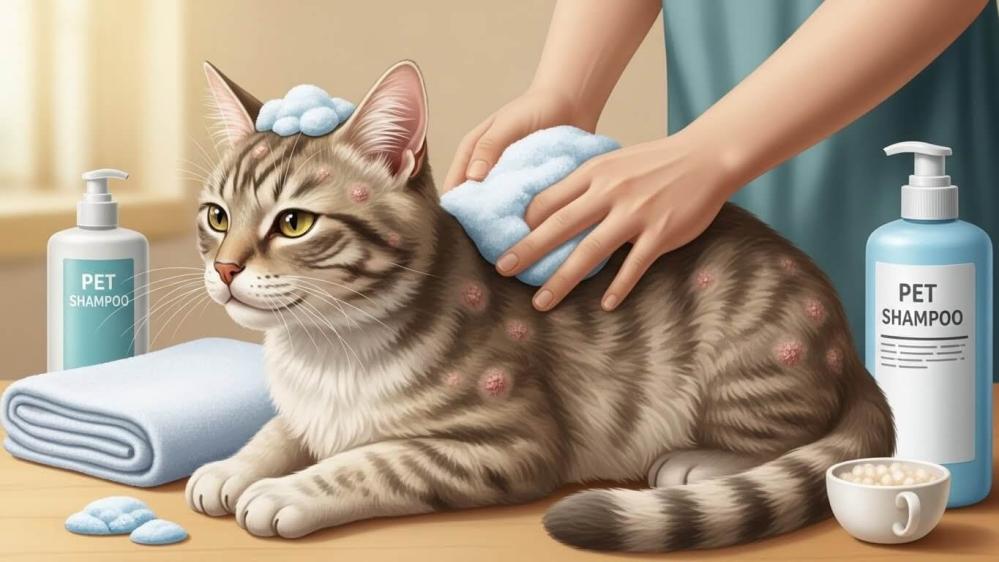
Fungal infections in cats are among the most common and bothersome health problems for cat owners, not only because they cause fur damage and hair loss, but also because they are a contagious skin infection that can easily be transmitted to humans. Many cat owners seek the fastest way to treat fungal infections in cats without exposing their pet or family members to any risks.
In this article you will learn comprehensively about the causes of fungal infections in cats, the forms of fungal infections in cats, the initial form of fungal infections in cats, as well as the treatment of fungal infections in cats at different stages, with an explanation of everything related to fungal infections in cats in humans and methods of prevention.
What are cat fungi?
Feline fungal infections are skin infections caused by the overgrowth of certain fungi on a cat's skin or hair follicles. Classified as a common skin condition, they often appear as circular, hairless patches and may be accompanied by redness, scaling, or itching of varying intensity.
The danger of cat fungus lies in its rapid spread, both among cats themselves and from cats to humans, especially children and those with weak immune systems.
ﻻ
Causes of fungal infections in cats
There are many causes of fungal infections in cats , and the infection often results from the simultaneous occurrence of more than one factor:
Weakened immune system
Young cats, those with chronic illnesses, or those suffering from malnutrition are more susceptible to infection. Weakened immune systems are a major contributing factor to fungal infections in cats, which accelerates the spread of the infection.
humid and unclean environment
Fungi thrive in warm, humid environments. Failure to clean bedding, or the accumulation of hair and moisture, creates an ideal environment for fungal growth.
Contact with infected cats
One of the main causes of fungal infections in cats is transmission through direct contact with an infected cat or sharing items such as brushes and food bowls.
Going out to open spaces
Cats that go outside may pick up fungi from soil or contaminated surfaces without showing immediate symptoms.
Cat fungus shapes
Fungal infections in cats vary in form depending on the type of fungus and the location of the infection; some of the most common are:
Ringworm
Ringworm is the most common fungal infection in cats. It is caused by fungi such as Microsporum canis and Trichophyton mentagrophytes. It appears as circular, hairless patches and causes intense itching. Ringworm is a fungus that can easily spread between cats, as well as to humans.
Skin fungus (Malassezia)
It appears as peeling, redness, sometimes with an unpleasant odor, and spreads in the fold areas.
Ear fungus (Otomycosis)
One type of fungal infection in cats affects the inner ear and appears as dark discharge, severe itching, and constant head shaking.
Foot fungus (Pododermatitis)
Some cats may develop fungal infections on their paws, causing swelling and redness of the skin, especially between the toes. This may be accompanied by sores or peeling skin.
The initial stage of fungal infections in cats
Identifying the initial stage of fungal infections in cats is a crucial step in prompt treatment. The infection often begins with:
- small hairless patch
- Slight redness of the skin
- Simple flakes around the spot
- Sometimes without noticeable itching at first.
Recognizing the early signs of fungal infections in cats helps in applying the fastest method to treat cat fungus before it spreads.
Symptoms of fungal infection in cats:
- Hair loss or bald patches
- Red or scaly patches on the skin
- severe itching
- Appearance of skin scales or ulcers
- A foul odor from the infected skin
How is a fungal infection in cats diagnosed?
Diagnosing fungal infections in cats can be difficult at first due to the density of the fur. The veterinarian relies on:
- clinical examination
- UV lamp
- Laboratory tests for skin or hair
Early diagnosis significantly reduces treatment time.
Read also: The best ways to care for cats
The fastest way to treat fungal infections in cats
The fastest way to treat fungal infections in cats varies depending on the severity and extent of the infection, and treatment can be divided into two stages:
Treatment of fungal infections in cats in mild cases
In the early stages, treating fungal infections in cats is easier and faster:
topical treatment
- Use a medicated shampoo specifically formulated for treating cat fungus twice a week.
- Antifungal ointments or sprays prescribed for cats only.
- Use diluted apple cider vinegar (one part vinegar to two parts water) to wipe affected areas with a clean cotton ball as an adjunct measure only, avoiding open sores or irritated skin.
- Apply a small amount of coconut oil to the scabs to help moisturize the skin and reduce dryness, without considering it a primary treatment for fungi.
⚠️ Important warning: These methods do not replace veterinary treatment, and are not used in advanced or widespread cases.
Environmental care
- Isolation: The infected cat should be placed in an easy-to-clean room (such as the bathroom or a room with a ceramic floor) until it recovers.
- Chlorine: Use chlorine solution to clean surfaces and floors, as it is the most powerful killer of fungal spores.
- Hair removal: Use a vacuum cleaner daily to remove loose hair, then dispose of the vacuum bag immediately. Cat fungi can be transmitted to humans, so be sure to remove all loose fur.
- Washing bedding: Wash the cat's bedding regularly in very hot water with disinfectant.
Immune support
- Adding fish oil (Omega-3) to food improves skin health.
- Providing a balanced diet rich in protein and vitamins.
- Reduce stress and anxiety in the cat, as psychological stress weakens the immune system.
These steps are considered one of the fastest ways to treat fungal infections in cats in the early stages.
ﻻ
Treatment of fungal infections in cats in advanced cases
When the infection is widespread, the fastest way to treat fungal infections in cats is through veterinary intervention:
Drug therapy
- Oral antifungals: Doctors prescribe a medication specifically for treating fungal infections in cats, taking into account the cat's weight, age, and health history, while strictly adhering to the dosage prescribed by the doctor to avoid affecting the liver and causing health problems.
- Antibiotics: If the cat has wounds, pus, or a foul odor, this indicates a secondary bacterial infection that requires an antibiotic in addition to treatment for the fungus.
- Creams and ointments: Use topical creams specifically formulated for cats to relieve inflammation.
ﻻ
therapeutic baths
- Lime sulfur solution: This is considered one of the strongest treatments. The cat is immersed or its entire body is wiped with this solution once or twice a week.
- Its smell is very strong and unpleasant and may temporarily change the color of the cat's fur, but it is very effective in killing spores.
fur shaving
In cases where fungi cover large areas, the doctor may recommend:
Shaving the cat's fur completely: This is to reduce the amount of spores present in the environment and to allow medical solutions to reach the affected skin directly.
Extreme care must be taken during shaving to avoid injuring the irritated skin, and the shaved hair must be disposed of immediately as hazardous biological waste.
toxoplasmosis in humans
Fungal infections in humans are common, especially through direct contact with an infected cat. The infection manifests as:
- small red spot
- mild itching
- Rapid development into a clearly circular shape
Early detection of toxoplasmosis symptoms in humans prevents the spread of infection.
Treating fungal infections in cats using human methods
- Start immediately with an antifungal cream from the pharmacy, and apply it to the affected area twice a day, washing your hands before and after use.
- Keep the affected area dry ; avoid moisture and sweating as these help the fungus to spread.
- Change clothes and towels daily and wash them in hot water to avoid reinfection.
- If the infection is on the scalp , use a medicated antifungal shampoo twice a week and do not share combs or hats.
- See a doctor immediately if the condition does not improve within 7–10 days or if the spots begin to spread, as you may need prescription oral treatment.
⚠️ Important warning: It is not recommended to use any oral medications without medical advice, especially for children or pregnant women.
Prevention of fungal infections in cats
- Regular check-ups for cats
- Maintaining cleanliness
- Isolate any new cat
- Sterilization of shared tools
Read also: Information about neutering cats
The role of the Seventh Bird store in the journey to treat cat fungal infections:
The treatment plan is not complete without the right tools and preparations, and this is where the Seventh Bird store comes in .
It offers a complete range of products that support the fastest way to treat fungal infections in cats:
- Types of medicated shampoos : those designed to eliminate fungi.
- Antiseptic sprays : which help in skin healing.
- Nutritional supplements and vitamins: Boost your cat's immunity from within.
Shopping from a trusted source means getting genuine products that ensure your pet's safety and save you the trouble of searching.
In conclusion:
Understanding the causes of fungal infections in cats and early intervention remains the cornerstone of protecting your pet and your home. Noticing the initial signs of fungal infections in cats, which often appear as a small red spot or slight hair loss, gives you the advantage of starting treatment immediately and preventing the infection from spreading. Always remember that neglecting treatment can lead to the transmission of fungal infections to humans, especially children or those with weakened immune systems, so maintaining hygiene and sanitation is essential for everyone's protection.
Frequently asked questions:
How long does it take to treat fungal infections in cats?
The duration depends on the severity of the infection and the cat's immunity, but on average, treatment lasts between 3 and 6 weeks. In severe cases, treatment may extend for several months to ensure complete eradication of the spores and prevent relapse.
Does frequent bathing cure fungal infections?
Bathing with regular water and shampoo will not cure fungal infections; in fact, it can worsen the condition if the cat is not dried thoroughly (as fungi thrive in moisture). Treatment involves using a specialized medicated shampoo containing antifungal agents, applied according to a specific schedule.
How do I know if my cat has started to recover?
Signs of recovery include:
The spread of the affected areas has stopped.
The scales and redness have subsided.
The growth of small hairs (fluff) in areas that were previously hairless.
The itching completely disappeared.
Can fungal infections in cats be treated at home?
Home remedies and disinfectants can be started for minor infections, but it is always advisable to consult a veterinarian to ensure the fastest method is used to treat cat fungus and to avoid trying substances that may irritate the cat's skin, such as vinegar or garlic in high concentrations.
Should the infected cat be isolated throughout the treatment period?
It is preferable to isolate the cat in a room that is easy to clean (such as a room with a ceramic floor) to reduce the spread of spores in carpets and furniture, which makes it easier to control the infection and protect the rest of the household.
Is it possible to live with fungal infections in cats?
Living with cat fungus without treatment is an undesirable and very stressful option, both for the cat and for the homeowners, due to the possibility of cat fungus being transmitted to humans.
What is the fastest way to treat fungal infections in cats?
To achieve the fastest way to treat cat fungus, you should not rely on just one solution, but on a three-dimensional offensive plan (topical treatment, internal treatment, and environmental disinfection).