
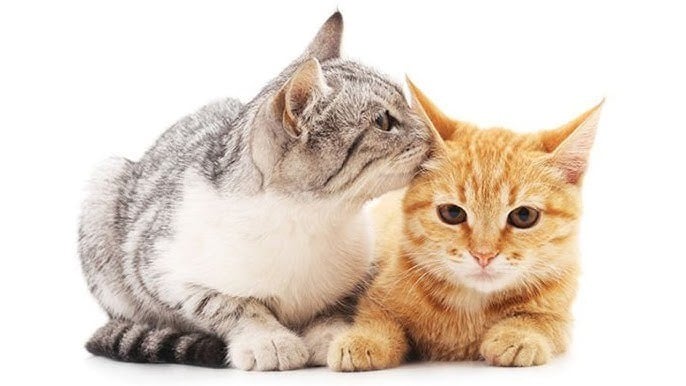
A cat's refusal to mate, despite being both a wonderful and mysterious house cat, may explain some of their behaviors. Generally, a cat in heat will accept mating with a male; if so, no, but what is the reason for her refusal? Here's what you should know.
The cat refused to mate.
It seems that no cat is interested and has no intention of starting a family: Why doesn't the cat want to mate and when will she understand if something is wrong?
Does your cat seem so distracted that she doesn't pay attention to her companions or try to approach them? There are several reasons why she might refuse to mate and start a family; you need to know and understand them well to rule out any health problems. Among the many behaviors cats exhibit, this one is truly quite unusual: all the reasons why a cat might refuse to mate and whether or not it's justified to force her into this situation.
Reasons why a cat might refuse to mate
Aside from illnesses, which we will analyze later, let's look at the reasons why a cat might be reluctant to mate with another cat. We'll note that male and female cats have different motivations: the male might be more interested in territorial dominance, while the female might make it a matter of personal preference. Indeed, if the cat doesn't like the male and refuses contact, let's examine the reasons why a cat might not want to mate, one by one:
1- Sudden change in habits and routine:
Do you want to stress your cat? Simply changing its daily routine, which it loves so much, will be enough. Cats are among the most sociable animals in nature and dislike change, even if it improves their life. You must give them time to accept and adapt, without any kind of coercion. Once the cat has adjusted, it might even consider mating.
Therefore, we have dedicated the seventh bird to you to calm your cat:
Befar spray for training cat behavior
Royal Canin Insecticif Wet Cat Food
Seven Bird Rotating Dental Cleaning Ball
Smarty Cat Natural and Strong Catnip Spray
2- The final shock:
Trauma is closely linked to the discourse of sudden life changes, which include: grief, the removal of a person or animal from the home, the introduction of new animals or people into the same home, etc. In short, anything can be “painful” for a cat and lead it to exhibit feline stressors that should not be underestimated and which clearly make it unavailable to “meet” other similar stressors.
3- Regionalism:
Cats are hunters; it's in their DNA that they are predators, and therefore they are also very territorial. This isn't just about objects and spaces, but also about people: a cat feels it must protect its family and territory, and if it feels threatened by the presence of something (or even something else), it certainly won't want to be courted. It perceives this as a constant threat to its authority in the home.
4- Boredom:
If a cat is often alone at home, has no entertainment, and no hobbies to play with, it can easily suffer from extreme boredom. Imagine being alone all day without any distractions: that must be terrible for an animal that loves its independence. And if this boredom gradually turns into apathy, it's likely the cat isn't experiencing any sexual urges.
Therefore, we have dedicated the seventh bird to you :
Beaver Cat Comfort Vaporizer for Cats
Seven Bird Cat Scratcher Seat with Sleeping House
Seven Birds interactive mouse toy for dogs and cats
Seven Bird Cat Tree with Scratcher and Bed - Easy to Assemble
5- Crowded spaces and lack of privacy:
If we think that two cats forced to share the same space are somehow restricted and unable to have a little privacy, get to know each other better, and mate more easily, we're way off the mark! Two cats forced by circumstances to be together easily become patient with each other. So it's best to change your "strategy"!
6- The cat's refusal to mate due to jealousy and aggression:
Has the cat that mated with her entered the house? It's easy for the older cats in the house to dislike him. Much also depends on our attitude: if his owner pays more attention to the newcomer, ignoring the first one, well… how can he like him if he steals his friend?