
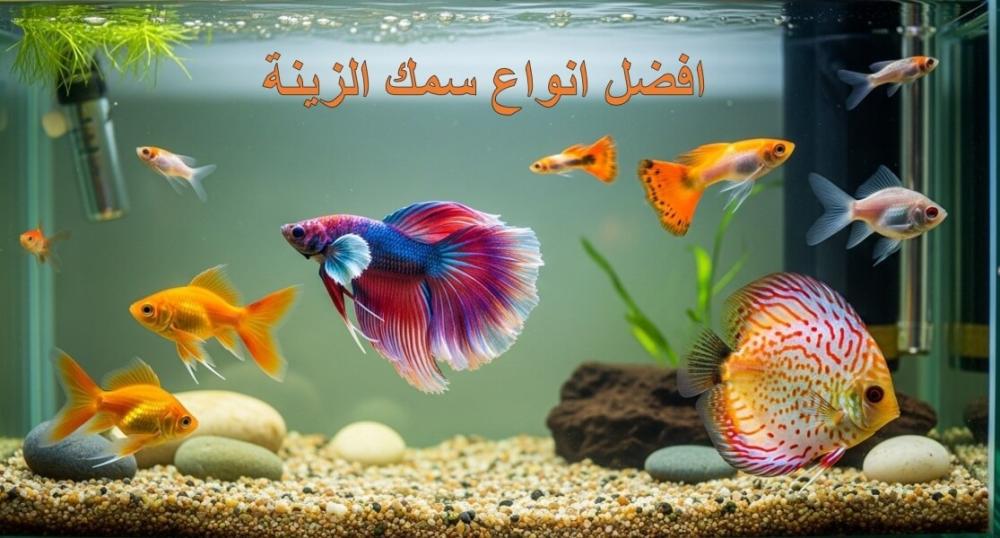
Have you ever thought about turning a quiet corner in your home into a vibrant work of art? Owning ornamental fish is not just a passing hobby, but an art of adding a touch of aquatic nature's magic to your day, as studies have proven that observing the movement of fish reduces stress and gives an unparalleled feeling of relaxation.
With so many options available, many hobbyists find themselves confused about choosing the right starting point. Therefore, in this article, we've compiled a list of the best ornamental fish varieties that combine beauty and ease of care to suit your taste and experience level. Whether you're looking for the stunning color variations of betta fish with their fairytale-like fins, or you want to build a complete community of small schools, we've got you covered.
What are the best types of ornamental fish?
Goldfish:
It is one of the best and most widespread types of ornamental fish.
Shape and appearance:
It is considered a symbol of beauty, distinguished by its diverse colors (gold-red-orange) and the different shapes of its bodies and fins. Its size is affected by the size of the aquarium in which it lives.
Care and nutrition:
Feed specially formulated goldfish to avoid digestive problems, varying between vegetables and frozen worms to obtain a balanced food composition.
Goldfish ornamental fish need space to grow healthily and properly, so make sure you get them a special fish tank.
Unique behaviors and characteristics:
A memory that is stronger than you think can be trained to recognize its owner or mealtime.
High ability to withstand harsh conditions such as lack of oxygen.
It helps clean the sink by picking up food scraps from the bottom.
Distinguishing between male and female:
Size:
The male has a slimmer, more streamlined body and tends to be slightly taller than the female.
The female is fuller and rounder, especially in the abdominal area.
colors:
The male's colors become more vibrant and bright, especially during the mating season, to attract females.
Fins:
Female fins are short and rounded, while male fins are longer and pointed.
Guppy fish:
Shape and appearance:
Guppies come in a variety of colors and shapes, hence they are known as rainbow fish. You can expect to find them in every imaginable color. Usually, the upper part of the guppy's body is dull, while the back is brighter with a more vibrant color. They are very small and have different patterns on their tails and bodies.
Care and nutrition:
When acquiring ornamental guppies, it is necessary to ensure that the aquarium is properly set up and the water is circulated correctly, and a water heater is required.
Guppies are not picky eaters and can eat almost anything you offer them, but they feed mainly on high-quality fish flakes; therefore, make sure to choose protein-rich food.
Unique behaviors and characteristics:
You will often see the males of this fish chasing the females in an attempt to impress them by waving their colorful fins.
If you have this fish in your aquarium, and it is constantly hiding, it is likely an indication that it is sick or stressed.
Distinguishing between male and female:
Size:
The male is smaller than the female, ranging in length from 1.5 to 4 cm.
The female is between 3-7 cm
colors:
Males come in bright and varied colors to attract females.
Fins:
The males have longer and more ornate fins.
Koi fish:
Shape and appearance:
They boast a stunning array of colors and patterns. Colors range from red to yellow, and these colors and patterns vary among different species, making each fish unique. Koi sizes range from small to large.
Care and nutrition:
Give her special kiwi flakes and granules, rich in protein and vitamins.
Consider providing balanced and healthy foods, avoiding foods that are not easily digestible, and providing food appropriate to its size and the water temperature.
Unique behaviors and characteristics:
Koi fish can live for a long time; they can live for decades in suitable conditions.
It is considered a very intelligent and interactive fish that has the ability to recognize its owner and interact with him.
It has the ability to adapt to harsh conditions and different fish populations.
Distinguishing between male and female:
Size:
Males: Smaller, thinner, and more agile.
Females: Larger, especially in the abdominal area, and more rounded.
colors:
Males: Brightly colored, with various spots, lines and patterns, which distinguishes them from females.
Females: Their colors are often dull and unremarkable (gray or silver), because their goal is to hide from predators.
Discus fish:
It is one of the best types of ornamental fish, beloved and distinctive, and adds a special charm to your home.
Shape and appearance:
Discus fish are among the most beautiful and popular freshwater aquarium fish. They are known for their round, disc-like bodies and vibrant colors, and are native to the Amazon River basin.
Care and nutrition:
Providing discus fish with a balanced and varied diet is crucial for their overall health. These omnivorous fish require a combination of high-quality flakes , pellets, and frozen foods.
You need clean, well-filtered water. It's important to monitor the water's properties regularly.
Unique behaviors and characteristics:
It is nicknamed the Queen of Freshwater Aquariums for its unique beauty and value in the world of fish enthusiasts.
They prefer to live in large groups and in slow-flowing waters.
She exhibits strong parental behavior, protecting her young from dangers and taking care of them.
They form strong couples and choose their life partners for long periods, and rarely separate.
Distinguishing between male and female:
Size:
The male is larger than the female, and is distinguished by a more prominent, broad forehead and a large, strong body.
The female is smaller and her abdomen appears more noticeably swollen.
colors:
Males are more bright and colorful patterns and lines are spread all over the body, while females, although beautiful, have less intense colors than males.
Betta fish:
The best types of ornamental fish have captured the attention of fish breeding enthusiasts around the world. They are characterized by the existence of many types of betta fish that vary in their external appearance, but the characteristics and care are common to all types.
Shape and appearance:
A streamlined, elongated body, typically reaching 6-7 cm in length, and attractive colors including fiery red, royal blue, purple, and even metallic and transparent colors.
Care and nutrition:
Give her pellets specifically for the fighter .
Feed her very small amounts (about the size of her eye) twice a day to avoid bloating and water contamination.
The betta needs a tank of at least 10-15 liters (avoid very small, spherical tanks). A lid is recommended as they sometimes jump out.
Unique behaviors and characteristics:
Aggression: Males can never live together in one tank because they will fight to the death.
The labyrinth organ: It possesses a unique organ that allows it to breathe atmospheric air directly from the water's surface, helping it to survive in oxygen-poor waters.
Bubble nest: The male builds a bubble nest on the surface of the water, which is evidence of his readiness to mate and his good health.
Distinguishing between male and female:
Size:
The male is very long and streamlined, while the female is shorter and plumper.
colors:
The male's colors are bright and strong, and it does not have a white spot like the spot on the underside of the female fighter's abdomen.
Fins:
In the male, the fins have a more attractive, beautiful, and streamlined appearance, while the female's fins are short and simple.
Types of Fighter Fish with Pictures:
1. Veiled-tailed betta fish:
The long-tailed veil betta is the most common type of betta found in pet stores. It is characterized by its long, flowing tail. It is hardy, affordable, and easy to keep, making it an ideal choice for novice betta owners.
2. Beta Blacks:
Betta blackets are characterized by their short, rounded fins and strong, muscular bodies. They closely resemble wild bettas and are known for their active swimming and jumping abilities. They are generally recommended for those seeking an easy-care betta with few fin-related problems.
3. Crested-tailed betta fish:
Crownfish are distinguished by their prominent, pointed tails that resemble a crown. Their elongated fin rays give them a fierce and attractive appearance. These fish require clean water to prevent fin damage, but their bold look makes them a standout in any aquarium.
4. Half Moon Betta Fish:
Half-moon bettas are distinguished by their tails, which extend at a 180-degree angle, forming a perfect semicircle when fully extended. They are very attractive, but require special care to avoid fin damage. This species is very popular at fish shows and among experienced aquarists.
5. Double-tailed betta fish:
This species is characterized by two separate lobes in the tail, suggesting a forked tail. Fish with a double tail typically have a shorter, thicker body and a distinctive swimming style. They are less common but very visually striking.
6. Deltatail Betta:
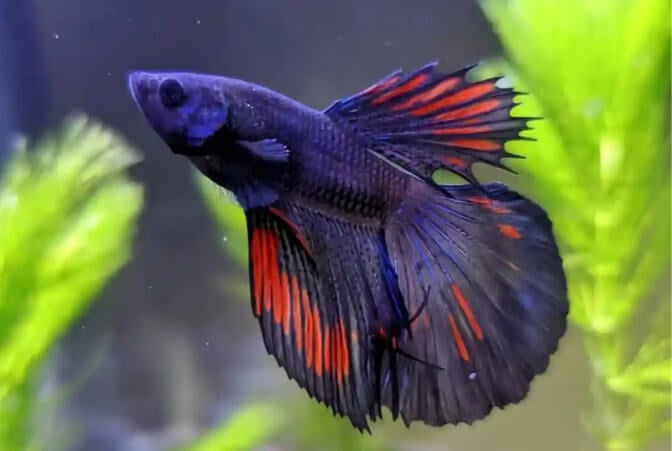
Delta tails are characterized by their triangular shape that extends outwards but does not reach 180 degrees. Their edges are straight and smooth, giving them a more balanced appearance than some dramatic tail types.
How do you care for ornamental fish?
Caring for ornamental fish is an enjoyable and calming hobby, but it is a responsibility that requires you to take specific steps:
Preparing the appropriate environment (the aquarium):
The right size:
The larger the aquarium, the faster the water quality stabilizes. Avoid small, spherical aquariums as they stress the fish and lack proper aeration.
Location:
Place the aquarium away from direct sunlight (to prevent algae growth) and away from direct air currents (such as air conditioning).
Additions:
Use well-washed sand or gravel , and provide hiding places for the fish (natural plants or clay caves) to make them feel safe.
Water quality:
Filtering:
The filter is very important for cleaning the water of waste and agitating the surface to provide oxygen.
The biological cycle:
Do not add fish immediately after filling the tank with water. The tank should be run for several days (or bacterial stimulants should be used) to create beneficial bacteria that break down ammonia toxins.
Temperature:
Most tropical ornamental fish need a temperature between 24-28 degrees Celsius. You may need a heater with a thermometer to maintain stability.
Getting rid of chlorine:
Tap water contains chlorine that is deadly to fish, so a dechlorinator (conditioner) should be used before adding water to the aquarium.
Proper nutrition:
Quality:
Choose food specifically for your type of fish (flakes, granules, or frozen food):
Toka fish food is a floating pellet.
Quantity:
The golden rule is: Give them an amount they can eat in just two minutes.
Repetition:
Feeding them once or twice a day is sufficient. Overfeeding is the leading cause of death in ornamental fish (due to water pollution and liver failure).
Regular cleaning and maintenance:
Partial water change:
Never change the entire aquarium water. Only change 20% to 30% of the water weekly with fresh, treated water.
Cleaning the glass:
Use a special net to clean and purify the aquarium water.
Wash the filter:
When cleaning the filter sponge, wash it with the same aquarium water, not tap water, so as not to kill the beneficial bacteria inside.
Note the health status:
Monitor your fish daily for signs of illness:
Swimming in an unusual way or with unusual laziness.
The presence of white spots (like salt) on the body.
Loss of appetite or erosion of the fins.
What is the role of the Seventh Bird store in caring for ornamental fish?
The Seventh Bird store provides specialized supplies, especially for owners of betta fish (fighting fish) species that require special care in specific conditions.
Water and lighting. Through their diverse range of filter products, Heaters , and LED lights .
Innovative baths , and vitamin-rich foods suitable for holidays.
The seventh bird helps you transform your small pond into a complete and visually stunning ecosystem.
in conclusion:
Your success in raising ornamental fish depends on your awareness of their types and requirements. This article helped you identify the best types of ornamental fish, their behaviors and needs. After learning about them, you can choose the best for you. Remember that different types of ornamental fish add deep psychological comfort to your home with irresistible charm.
Frequently asked questions:
What are the best types of ornamental fish for beginners?
Guppies and goldfish are among the best types of ornamental fish for beginners due to their ease of care and ability to adapt to different aquarium conditions.
Is it possible to create an environment where betta fish can live together?
Yes, but under very strict conditions. It is not simple because betta fish species (especially males) have an innate hostile instinct towards their own kind, which is why they are known as fighting fish.
How often should the aquarium water be changed?
It is recommended to change about 20% to 25% of the aquarium water weekly to maintain the balance of ammonia and nitrates, and to ensure that the ornamental fish remain in a clean and healthy environment.
Why are guppies called by this name?
These fish were named in honor of the British scientist and researcher Robert John Lechmere Guppy, who discovered them.
Read more articles about:
How old are cats when they die? Average lifespan of cats and factors that prolong their lives.
The fastest way to treat fungal infections in cats: causes, forms, and effective treatment methods
The best pet supply store in Saudi Arabia: A comprehensive guide to choosing a reliable store
Osteoporosis in dogs: A comprehensive guide to symptoms, causes, and treatment