
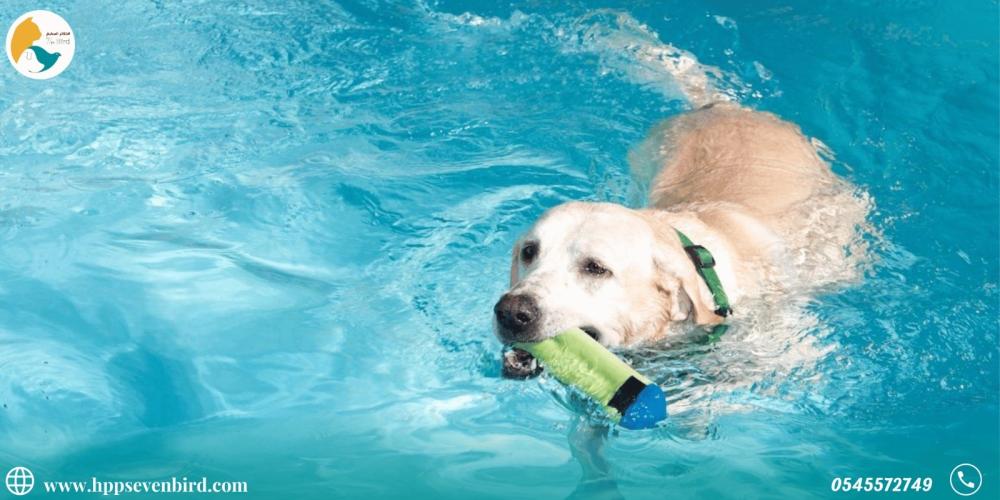
Does your dog have endless energy and a love for life, so a new city becomes a fun way to release that energy? Not only are new and refreshing activities for your dog, especially on hot days, but they're also excellent full-body exercise, gentle on their nails, and can boost their confidence. But are all dogs natural swimmers? Would you like your dog to laugh?
?Are all dogs natural swimmers
Contrary to popular belief, not all dogs are natural swimmers. It is true that many breeds, such as Golden Retrievers, Labrador Retrievers, Irish Water Spaniels, and Newfoundlands, were bred to work in the water and have a strong swimming instinct. These breeds often have webbed feet and water-resistant fur that helps them move easily in the water.
However, there are other breeds that may find swimming difficult or even dangerous:
Brachycephalic breeds: such as French Bulldogs, English Bulldogs, and Pugs. Their facial shape makes breathing difficult in the water, and they can easily drown.
Short-legged, heavy-bodied breeds: such as Bulldogs and Basset Hounds. Their structure makes them difficult to float.
Single-coated breeds: such as Terriers and Doberman Pinschers.
Very Important: Even if your dog is a breed known for its love of water, never assume he'll swim naturally. Every dog is an individual with his own personality and experiences.
:Essential Equipment Before You Start
Before you begin your dog's first "swimming lesson," make sure you have the following equipment:
A dog life jacket (life vest): This is the most important of all! A life vest provides buoyancy for your dog.
Choose one with a sturdy handle on the back for easy lifting.
Floating toy: To attract your dog's attention and encourage him to enter the water.
So, we've dedicated this to you from seventh bird:
Seven Bird Weighted Ball Dog Chew Toy
Colorful balls for dogs and cats from Seven Bird
Treats: To reinforce positive behavior.
So, we've dedicated this to you from seventh bird:
Klybeck Caviara Dog Treats Chicken Sticks 80g
oasy Puppy Treats Crunchy Cream Filled Biscuits 70g
A towel: To dry your dog after swimming.
So, we've dedicated this to you from seventh bird:
Clothes for dogs and cats of the most luxurious types of fabric
A source of fresh water: For your dog to drink after or during swimming, and to rinse off seawater or chlorine.
Dog shampoo: If you're going to swim in seawater or a pool.
So, we've dedicated this to you from seventh bird:
Bioline Shampoo for Dogs and Cats to Get Rid of Insects and Their Allergies 200ml
Trixie shampoo coat for dogs 250ml
Safe swimming spot: The spot should be calm, shallow at first, and free of strong currents or dangerous obstacles.
So, we've dedicated this to you from seventh bird:
Games and entertainment for dogs. Dog pool. Dimensions: 20-80 cm. From Seven Bird.
:Steps to Teaching Your Dog to Swim
The secret to teaching dogs to swim is gradualism, patience, and positive reinforcement. Never force your dog into the water.
1. Familiarize Your Dog with Water
Start in a very shallow area: whether it's a dog pool, a small children's pool, or a beach. The goal is for your dog to become familiar with the water without feeling threatened.
Encourage him to approach: Place treats or his favorite toy near the water's edge. Let him explore on his own.
Get into the water with him: If your dog is hesitant, get into the water yourself and sit quietly in it. Let him come to you.
Never throw your dog into the water: This can create shock and a permanent fear of water.
2. Gradually enter deeper water
Put on a life jacket: Once your dog is comfortable in shallow water, put on a life jacket.
Enter the water with him to an appropriate depth: so that he can stand with his head above water.
Provide physical support: Hold your dog under his belly or use the handle of his life jacket to support him. Encourage him in a calm, reassuring voice.
Encourage him to "paddle" with his front limbs: Dogs tend to focus on using only their front limbs at first, which causes them to tire quickly and sink their rear end. Help him understand how to use his hind limbs as well.
Use a floating toy: Throw the toy a short distance away and encourage your dog to swim to it.
3. Build confidence and skill
Short intervals: Start with very short swimming sessions (5-10 minutes) and gradually increase the duration.
Positive reinforcement: Praise your dog frequently and give him generous rewards for every successful step, even if it's just getting his feet wet.
Repetition: Practice swimming regularly to build his confidence and skill.
Safety first: Always stay an arm's length away from your dog.Especially in the beginning. Never leave him alone in the water.
4. Teaching him to get out of the water
This is an important point that is often overlooked. Make sure your dog knows how to get out of the pool or pond easily.
If there is a ramp or ladder, teach him how to use it. Repeat the out-of-water training several times.
:Additional tips for your dog's safety and comfort
Never force your dog: If your dog shows signs of extreme fear, stop and try again another day. The goal is a positive experience.
Stay calm and positive: Your energy will rub off on your dog.
Avoid swimming immediately after eating: Wait at least an hour to avoid bloating or gastrointestinal issues.
Pay attention to the water temperature: Make sure it's not too cold, especially for young or elderly dogs.
After swimming:
Rinse your dog thoroughly to remove chlorine, salt, or other contaminants from his fur and skin.
Dry him thoroughly, especially the ears, to prevent ear infections. Use towels, and some dogs may tolerate a hair dryer on a cool, low setting.
Check his ears and eyes to ensure there are no irritations.
Remember fresh water: Offer your child water to drink after swimming to replace any fluids they may have lost, and avoid drinking pool or seawater.
Be aware of potential hazards: currents, sharp rocks, toxic algae, boat traffic, and wildlife.
When should you seek professional help?
If your dog has a severe fear of water, or you feel like you're not making progress, don't hesitate to seek help from a professional dog trainer who specializes in water behavior or a private dog pool that offers swimming lessons with qualified instructors. They can provide personalized guidance and a safe environment for your dog.
Teaching your dog to swim is an investment in their health, happiness, and your relationship. It may take time and effort. But seeing your dog enjoy jumping into the water with confidence and enthusiasm will be a reward well worth the wait. Make it a fun and safe experience, and together you'll discover a whole new world of aquatic adventures!