
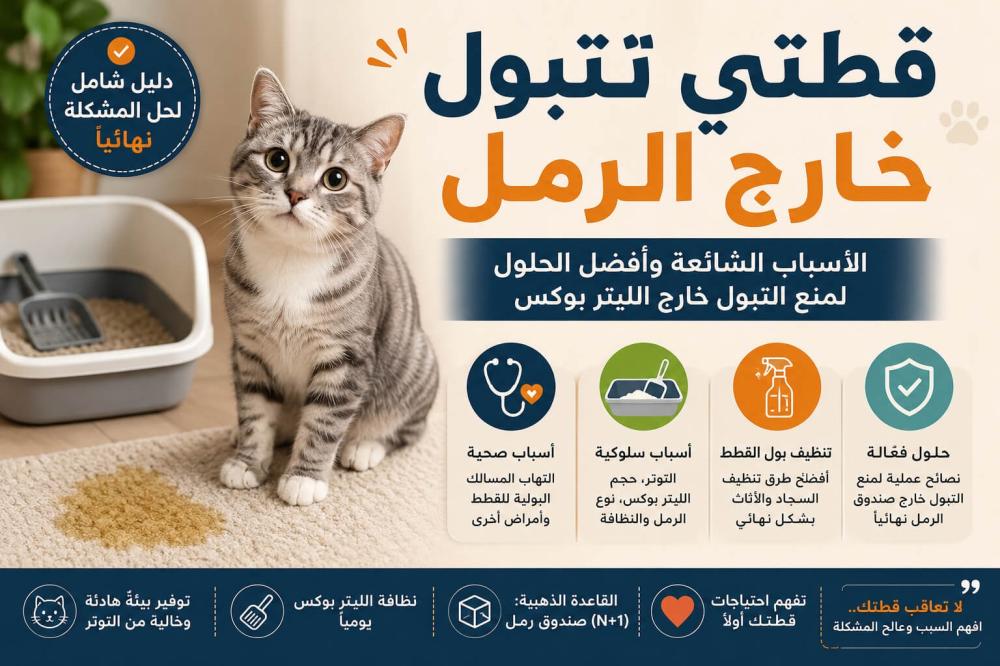
One in ten cats has problems using a cat litter box every year, and this is a common reason for visiting the vet. If your cat is avoiding a cat litter box, this is an indication of a problem that may be health problems such as a urinary tract infection, stress because the litter box is not the right size, or changes in the house. This article will answer the most important question: Why does my cat urinate outside the litter box? And how to get rid of this problem.
Why does my cat urinate outside the litter box?
It is important to know that your cat is not only provoking you with this behavior, but may also be suffering from a problem that could be health-related or caused by stress and anxiety:
Health reasons:
Urinary tract infection:
Urinary tract infections, the presence of crystals in the urine, and severe pain during urination can cause cats to associate the litter box with discomfort, leading them to avoid it altogether. Be aware of the following:
- Urinating with effort without producing a large amount of urine
- blood in urine
- Repeated visits to the fund with little to show for it
Kidney disease and diabetes:
Conditions like kidney disease force the body to eliminate toxins through increased urination. Cats with diabetes drink more water, leading to accidental urination when they can't reach the litter box quickly. Signs include:
- Excessive drinking
- Urinating in larger quantities
- Inactivity or weight loss
When should veterinary care be sought?
Never ignore sudden changes in your cat's litter box use. Seek immediate veterinary care if your cat exhibits the following symptoms:
- Not urinating for more than 12 hours (medical emergency)
- Vomiting accompanied by avoiding the use of a cat litter box
- Reduced appetite or loss of appetite
Aging:
Older cats face physical challenges. Joint pain or cognitive decline may make it difficult for them to climb into boxes or remember places. Consider the following:
Behavioral reasons:
If the veterinarian confirms that the cat is healthy, we move on to analyzing its behavior related to its surrounding environment:
Determining influence:
Territory marking is indicated by small urine spots on vertical surfaces. This is linked to social tension, possibly triggered by the introduction of another pet into the home.
Aversion to the box:
The reason may simply be the size of the litter box. If the box is too small, the cat will feel trapped and will not use it. Also, types of litter with strong odors may repel cats and cause them allergies.
Cats may also be repelled by unpleasant smells and a dirty litter box, so keep it clean using the appropriate tools:
The appropriate size of the litter box
Why do cats urinate on carpets?
Texture and comfort:
Cats are creatures who love comfort even in the smallest details of their lives. Carpets provide them with a soft and warm feel under their paws, and they also have a high ability to absorb liquids quickly, which ensures that the cat's paws remain completely dry, unlike some types of poor quality sand that may stick to their paws and bother them.
The link between pain and the box:
When a cat suffers from a urinary tract infection or bladder stones, it experiences severe pain while urinating. Instinctively, the cat begins to associate this pain with the litter box and avoids it, seeking another place that it hopes will not hurt. This is often the reason why cats urinate on carpets.
Lingering traces of an old scent:
Cats may urinate on carpets if they haven't been cleaned with specialized enzymatic cleaners that completely break down chemical odors. A cat's keen sense of smell will still detect the odor (even if you don't). For a cat, the smell of old urine somewhere means: this is where it's going to relieve itself.
Tips for getting rid of the problem of urinating outside the sandbox:
- Make your home more inviting to prevent your cat from urinating due to stress:
- Interactive games : Playing with toys such as feather sticks every day helps them release their energy.
- Scratching posts : These posts help redirect their sense of place to the right places.
- Give your cat treats when it uses the litter box.
- Avoid shouting or splashing water - this will only make things worse.
- Dr. Jane Bennett, a feline behavior specialist, says: Cats don't urinate out of stubbornness; their behavior stems from stress or environmental needs. Therefore, the root causes must be addressed, not just the symptoms.
- The (N+1) rule for litter boxes is one of the most important rules for raising cats: provide one more litter box than the number of cats. If you have one cat, provide two boxes in two different locations. This prevents the cat from feeling that its territory is dirty or cluttered.
- Choosing the right litter box size and location. Make sure the litter box size is appropriate for your cat. The cat needs enough space to turn around, dig, and look for a clean spot inside the box.
- Keeping litter clean: Cats have a sense of smell many times stronger than humans. Clean the litter daily (at least twice). Change the litter completely and wash the box with soap and water (without strong scents) once every two weeks. Avoid litter with strong scents that may irritate the cat's nose and cause it to avoid the box.
- Break the odor cycle with proper cleaning. Once a cat urinates outside the litter box, the area becomes "marked" with cat odor. Use only enzymatic cleaners when cleaning up cat urine. Regular cleaners mask the smell for you but not for the cat, causing it to return to the same spot. If carpets are a frequent target, try covering the usual spot with plastic wrap or aluminum foil for a while; cats dislike the feel of these materials under their paws.
Methods for cleaning cat urine from furniture:
Cleaning cat urine from floors:
Floors are the easiest to clean cat urine from, but speed is key to preventing the liquid from seeping into cracks.
- Use paper towels to absorb as much urine as possible. Dab the area gently and don't rub vigorously to avoid spreading the stain.
- Using an enzymatic cleaner: This is the most important step. After the vinegar has dried, spray with an enzymatic cleaner specifically formulated for pets. These cleaners completely break down uric acid crystals.
Cleaning cat urine from furniture and carpets:
- Fabrics are the biggest challenge, especially since they explain why cats urinate on carpets or sofas due to their high absorbency.
- Press with tissues: Place a thick layer of paper tissues over the stain and press down on it (you can stand on it) to absorb the liquids from deep within the fibers.
- Avoid steam and heat: Warning: Do not use steam cleaners; because high heat permanently incorporates urine proteins into the fabric fibers, making the smell permanent.
- Saturation with the enzyme cleaner: Pour the enzyme cleaner onto the stain so that it penetrates to a depth equal to the depth at which the urine reached (i.e., do not just spray on the surface).
- Cover the area: Place an upside-down box or piece of furniture over the wet area while it dries to prevent the cat from trying to urinate there again.
How the seventh bird helps solve the problem of urinating outside the sandbox:
If my cat urinates outside the litter box, I will visit Seventh Bird because it provides all the appropriate and ideal solutions with easy shopping and fast delivery, and it offers and presents ideas for outstanding products such as:
Ultra sand monitoring for cats to detect urinary tract diseases
It consists of additional crystals for the cat litter box designed for the early detection of urinary tract diseases.
Specifications:
- Function: The crystals contain pH indicators that change color when in contact with cat urine, helping to detect urinary tract problems before clinical symptoms appear.
- How to use: Sprinkle the crystals over clean cat litter, and check the color within 10 minutes of the cat using the litter box.
- Compatibility: Works with all types of cat litter (clay, silica, corn, wood).
- Features: Helps control odors and is safe for cats.
Hills Uniry c/d Dry Cat Food for Urinary Tract Infection and Stress Relief with Chicken
Hills Nutritionists and Veterinarians developed the c/d Multicare Diet Formula, a nutritional food specifically designed to support feline urinary health while also managing stress. In fact, c/d Multicare is clinically tested to reduce the frequency of the most common urinary signs by 89%. This dry food is made with chicken and has an irresistible taste your cat will love.
Simple Solution Litter Box Training Granules, a blend of natural herbs, 255g
Simple Solution Cat Litter Attractant uses a unique and natural blend of herbs that helps bring cats back to the litter box by stimulating their curiosity.
This product helps train your cat to use the litter box.
Easy to use: Simply spray over it and mix well into fresh cat litter.
Recommended by the veterinarian and safe for cats
An excellent treat for cats and kittens introduced to the house or new litter. It helps ensure your cat returns to the litter box and reduces the chance of rejection. It is made from a blend of herbs and can be added to cat litter.
in conclusion:
Remember that the answer to the question "Why is my cat urinating outside the litter box?" requires a combination of calm and careful observation. Whether the cause is medical, such as a urinary tract infection, or behavioral, such as an unsuitable litter box size, the solution always begins with understanding your cat's needs, not punishing them. By providing a healthy environment and maintaining hygiene, you can restore harmony to your home and ensure your pet's happiness.
Frequently asked questions:
Is vinegar enough to completely clean cat urine?
Vinegar helps to temporarily neutralize the odor, but it doesn't break down the uric acid in the urine. To ensure your cat doesn't return to the same spot, we recommend using the enzymatic cleaners available in our store; they are the only ones that can completely eliminate the odor from a cat's perspective.
What is the ideal litter box size for my cat?
The litter box should be one and a half times the length of your cat, from nose to the base of its tail. If the box is too small, the cat will feel uncomfortable and start looking for a larger space, which may be why cats urinate on carpets.
How can I tell if the cause of the urination is a urinary tract infection in cats?
If you notice your cat frequently urinating and passing very small amounts of urine, or if there is painful meowing or blood in the urine, these are strong signs of infection. In this case, you should consult a veterinarian immediately before trying any behavioral solutions.
Could the type of litter be the reason why the cat urinates outside the box?
Yes, cats are very picky. A cat might refuse litter if it's rough on its paws or contains strong chemical fragrances. Try switching to a natural, unscented litter to see if its behavior improves.
What are the reasons why cats urinate outside the litter box?
A cat may urinate outside the litter box due to health problems such as urinary tract infections or bladder stones, or due to behavioral and environmental factors such as a dirty litter box, unsuitable litter type, stress and changes in the home, or an insufficient number of litter boxes. Territorial marking behavior, especially in unneutered cats, can also be a cause.
How can I stop my cat from urinating outside the litter box?
This problem can be minimized by cleaning the litter box daily, placing it in a quiet and easily accessible location, using litter the cat prefers, and thoroughly cleaning previous urination areas with an enzymatic cleaner to remove odors. It is also advisable to provide an adequate number of litter boxes and reduce sources of stress within the home.
How do I punish my cat if it urinates outside the litter box?
Punishing cats for urinating outside the litter box is not recommended, as punishment can increase stress and fear, worsening the problem. It's better to identify and address the underlying cause of the behavior, while encouraging the cat to use the litter box through positive reinforcement and rewards.
What is the solution to the problem of cats urinating everywhere?
The solution depends on first identifying the underlying cause. It's advisable to rule out any health problems with a veterinarian, then ensure the litter box is clean and suitable for the cat, thoroughly clean any previous urination areas, and reduce stress in the surrounding environment. In some cases, spaying or consulting a cat behaviorist may help resolve the issue permanently.
Read more articles from The Seventh Bird about:
Why do cats sleep in the sand? And how can this behavior be addressed?
Symptoms of toxoplasmosis: Your comprehensive guide to causes, treatment, and prevention
How many hours do cats sleep and when should you worry?
Cat vaccination schedule in Saudi Arabia 2026: Types, dates, and prices
The best vitamins for cats in 2026: A comprehensive guide to immune and coat health
How to raise a kitten? A comprehensive guide from birth to two months old