
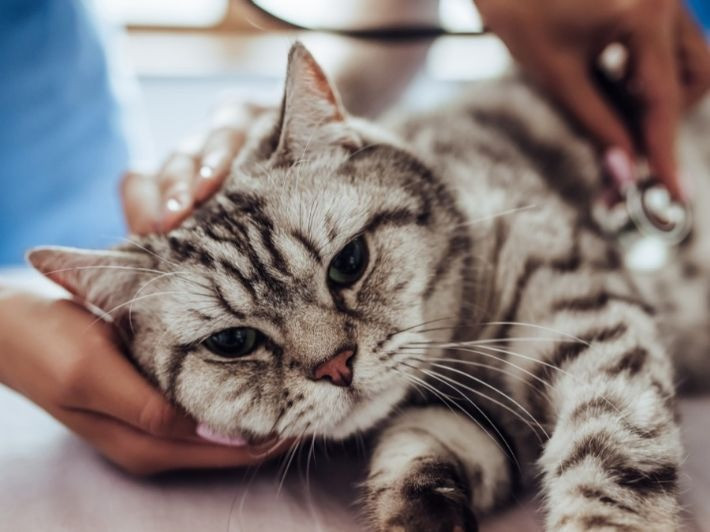
Kidney failure in cats:
Kidney failure means that your cat's kidney(s) are no longer functioning properly and are unable to perform their functions. It's important to know how to differentiate between acute and chronic kidney failure. In any case, if you have the slightest doubt about your cat's health, don't hesitate to contact your veterinarian.
1- Acute kidney failure
To understand what kidney failure is, it's important to consider how the kidneys work. Their primary role is to filter the body's blood to produce urine (which contains waste products), but more importantly, to maintain a stable blood composition. They also synthesize certain hormones. The nephron is the functional unit of the kidney. Each kidney contains several hundred thousand nephrons, and they are responsible for the filtration process. In kidney failure, filtration is no longer carried out properly due to damage to some of the nephrons. Because not all of them are functional, filtration is significantly reduced.
In cats, acute kidney injury (AKI) is often reversible and occurs rapidly, unlike chronic kidney injury (CKD), which begins gradually and is irreversible.
Therefore, you will find in the seventh bird :
Royal Canin Renal dry cat food
Hills K/D Chicken Kidney Care Dry Cat Food
Dr. Clouders wet cat food to support kidney function in cases of kidney failure
2- Chronic kidney failure
Chronic kidney failure means that the kidneys are gradually damaged and irreversibly destroyed for at least 3 months.
Several warning signs should make you consider consulting your veterinarian, and in particular this sign:
Polyuro-polydipsia: The cat urinates frequently and drinks more water. This is the first sign of contact urination, indicating a potential problem. When the nephrons are damaged, the kidneys must compensate by increasing the filtration rate, thus increasing urine volume. Additionally, the kidneys are no longer able to concentrate the urine, which becomes dilute (very pale yellow). To compensate for the water loss in the urine, the cat will drink more. However, this is difficult to observe in cats, especially those that live outdoors.
Therefore, you will find in the seventh bird :
Hills K/D Dry Dog Food for Kidney Care
Hills K/D Dry Cat Food with Kidney Care and Tuna
Symptoms of chronic kidney disease
The following clinical signs appear in advanced stages when the kidneys are severely damaged:
- weight loss
- Loss of appetite
- faded coat
- Possible vomiting
- Drying.
Treatment of chronic kidney failure
The medication administered depends on the cat's stage of illness and the symptoms it is exhibiting. In more severe cases, especially dehydration, hospitalization may be necessary.
The primary treatment is dietary change. Therefore, it is essential to switch to a therapeutic diet specifically designed for cats with kidney failure by gradually introducing new dietary changes. This diet will help preserve the cat's kidneys and increase its lifespan. Additionally, it is crucial to always provide the cat with fresh, unlimited water. Water restriction can lead to dehydration.
It's important to keep in mind that your cat's age is a crucial factor. This is because cats' kidneys function less efficiently with age, making them more susceptible to chronic kidney disease. Special dietary supplements are now available to support kidney function in older cats and prevent kidney failure. Don't hesitate to discuss these with your veterinarian.
Some strains are also predisposed to certain kidney diseases, notably polycystic kidney disease or even amyloidosis, which are among the possible causes of CRF.
In addition, it is recommended that older cats have regular veterinary checkups every year, or even every six months from the age of 7 or 8 years. Your veterinarian will be able to perform a thorough evaluation, specifically to ensure that the kidneys are functioning normally and to prescribe treatment if kidney failure is detected.