
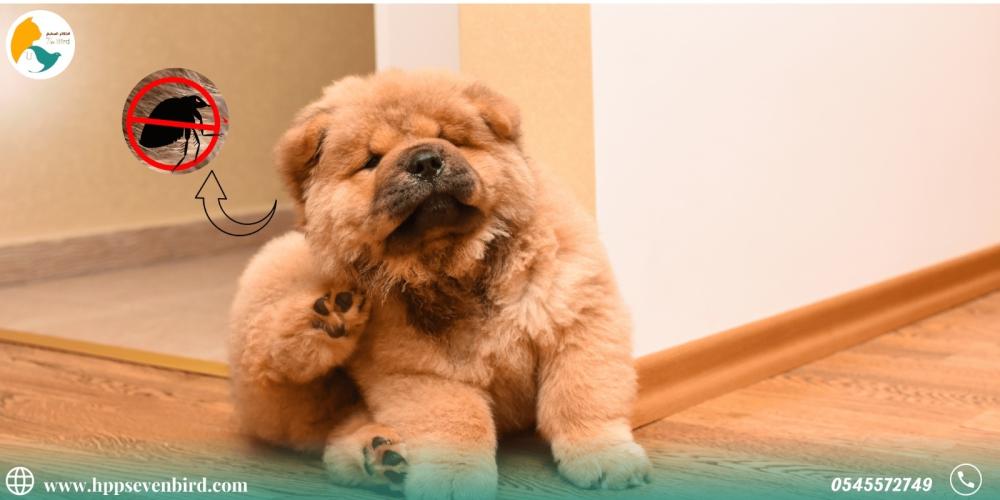
Parasites live on dogs' bodies and feed on their blood, causing intense itching and skin irritation, and transmitting diseases and other parasites. Preventing and treating them requires a thorough understanding of their life cycle and a comprehensive approach that includes the dog and its environment.
:Symptoms of a flea infestation in dogs
It is important to recognize the signs of a flea infestation early to begin treatment immediately:
Skin redness and irritation: especially in delicate areas of the body such as the abdomen, armpits, and base of the tail.
Hair loss and bald spots: resulting from constant scratching and biting.
Black or white dots*: The black dots are flea droppings (resembling black pepper), and the white dots are flea eggs (resembling grains of salt).
Agitation and restlessness: The dog appears agitated and uncomfortable due to the constant discomfort.
In severe cases, sores and wounds may appear due to scratching, or even symptoms of anemia (lethargy, paleness, weakness) may appear if the infestation is severe, resulting in significant blood loss.
:Ways to Prevent Flea Infestations
Prevention is always better than cure, especially when it comes to fleas, given their rapid reproduction and sometimes difficulty in eliminating them.
2.1 Regular use of preventative treatments:
Topical treatments (drops): Apply between the shoulder blades or along the back as directed. These products (such as Revolution or Effitix) are absorbed through the skin into the bloodstream or concentrated in the sebaceous glands, preventing flea reproduction or killing them on contact with the skin. They typically provide protection for 4 weeks.
So, we've dedicated this to you from seventh bird:
Beaphar Phyto Ampoules for eliminating insects for dogs 2ml x 3
Beaphar Phyto Ampoules for Insect Control for Small Dogs 2ml x 3
Bioline Anti-Flea and Parasite Spray for Cats and Dogs 207ml
Oral tablets: Some kill adult fleas within hours, while others (containing lufenuron) prevent egg development and interrupt their life cycle.
So, we've dedicated this to you from seventh bird:
Ezitro antibiotic for dogs and cats from Evisin Labs, 8 tablets
Flea collars: Provide long-lasting protection (sometimes several months) against fleas and ticks. Choose a veterinary-approved collar and ensure it fits comfortably around your dog's neck.
So, we've dedicated this to you from seventh bird:
Phyto Pure Bio collar for dogs from Beaphar to prevent the approach of insects and mosquitoes 65cm
Cleanliness and the surrounding environment:
Clean the area regularly: Fleas live in the surrounding environment (Carpets, upholstery, dog bedding) and not just on the animal. Wash the dog's bedding weekly with hot, soapy water. Vacuum carpets and furniture regularly and dispose of bags immediately.
Ventilate your home and clean your garden: Fleas prefer damp, dark places. Keep your home well-ventilated and reduce tall weeds in your garden, where larvae can hide.
Regular Check-ups and Bathing:
Combing the fur with a special flea comb: Use a fine-toothed flea comb to detect any fleas or eggs early and remove them immediately. This also helps distribute the natural oils in your dog's fur.
So, we've dedicated this to you from seventh bird:
The Sven Beard Flea Comb for Dogs and Cats is gentle on the skin
Seven Bird Silicone Handle Gel Comb for Cats and Dogs
Seven Bird Steam Brush for Dogs and Cats
Regular Bathing: Using an anti-flea shampoo (medicated or natural) helps remove fleas and their byproducts and soothes your dog's irritated skin. Be careful not to over-bathe to avoid drying out the skin.
So, we've dedicated this to you from seventh bird:
Bioline Shampoo for Dogs and Cats to Get Rid of Insects and Their Allergies 200ml
Aurum Chlorhexidine Shampoo 250g
3.2 Environmental Treatment:
This is the most important step! 95% of the flea problem (eggs, larvae, and pupae) may be living in the dog's environment, not on its body.
Wash all furnishings: Wash your dog's bedding, furniture covers, blankets, and other items in hot water (above 60°C) and then dry them in a hot dryer if possible.
Vacuuming: Thoroughly vacuum all carpets, sofas, room corners, and any place your dog sleeps. Pay special attention to cracks and crevices. Dispose of the vacuum bag immediately in a sealed bag outside the house.
Using safe insecticides: In severe cases of infestation, you may need to use a flea spray or powder on upholstery and carpets. Choose products designed for household use and safe for pets and children.
: Important Tips for Dog Care and the Environment
Regular Examination: Make checking your dog's coat (especially the belly, armpits, and ears) part of your weekly routine. Early detection makes problems much easier.
Proper Nutrition: A healthy dog with a strong immune system is more resistant to parasites and diseases. Provide him with a balanced diet rich in essential nutrients.
So, we've dedicated this to you from seventh bird:
Hills i/d Digestive Dry Dog Food Digestive Care Egg & Rice 1.5kg
Sigma Dry Food for Adult Dogs with Chicken 15kg
Isolate infected animals: If you have more than one pet and know one of them is infected, separate them during treatment and examine them all.
Patience and persistence: The flea life cycle takes several weeks. You may need to continue treatment and cleaning for a month or more to ensure all flea stages (eggs, larvae, pupae, and adults) are eliminated.
Veterinary Consultation: Never hesitate to consult your veterinarian. They are best able to accurately diagnose the problem and prescribe the appropriate treatment based on your dog's weight, age, and health condition, especially in severe cases or if your dog shows signs of anemia or allergies.
Fleas don't have to be a nightmare! With the right knowledge and consistent care, you can keep your dog happy and free of these parasites.