
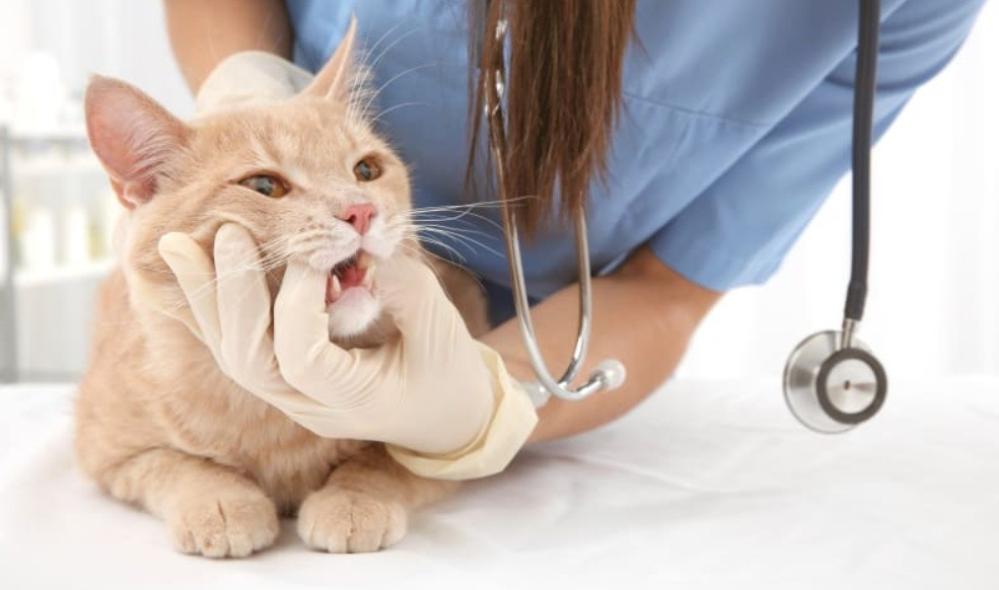
Have you noticed that your cat tilts its head when eating, avoids certain foods, or has unusual breath odor? These signs may indicate the beginning of a gum problem that needs your attention quickly before it turns into severe pain or loss of appetite.
In this article, we'll explore the main causes of gum and tooth inflammation in cats, the different types of internal gum inflammation, and how to properly treat gum inflammation in cats, both at home and at the vet. We'll also explain how to manage bad breath caused by gum inflammation, as it's one of the most important early indicators of oral problems in cats.
What are the gum diseases in cats and what are the most important early signs?
How do gum infections develop?
Gum inflammation typically begins with the buildup of a thin layer of plaque on the teeth, a mixture of bacteria, food debris, and saliva. If this plaque is not removed daily, it hardens quickly into tartar, which adheres firmly to the gum line. As tartar accumulates, the gums become inflamed and red, and the surface may become painful and bleed easily. Leaving this stage untreated allows bacteria to penetrate deeper into the tissues, causing significant pain and difficulty chewing.
Symptoms to watch for
Gum disease in cats manifests through several easily noticeable signs, such as difficulty chewing, a sudden loss of appetite, and unusual breath odor indicating high bacterial activity. You might also observe slight bleeding when touching the mouth, excessive salivation, and sensitivity when the cat tries to open its mouth.
Common signs include the cat refusing to eat its favorite food, tilting its head to one side while chewing to alleviate pain, or repeatedly scratching its mouth with its paws. Such behaviors are a clear indication of inflammation that requires immediate monitoring and care.
Understanding gum disease in cats:
- Gum disease in cats is often caused by neglect in cleaning and care, which leads to the accumulation of food scraps and bacteria that turn into plaque.
- If plaque is left untreated, it hardens into tartar (also called calculus). Tartar often appears as yellow deposits along the gum line.
- Tartar can cause inflammation of the gums, making them tender and red. Mild forms of gum disease are very common in cats.
- Gingivitis is not limited to older cats, but can also affect kittens and young cats.
What types of internal gingivitis are there in cats?
Marginal inflammation (stage one)
Marginal gingivitis is the simplest form of internal gingivitis in cats, occurring when plaque builds up and hardens into tartar, which presses against the gums and causes irritation. At this stage, symptoms are still mild and easily managed if detected early.
The most prominent symptoms at this stage:
- Slight redness along the gum line.
- Slight swelling around the teeth.
- Bleeding when the gums are touched.
- The presence of a white plaque layer on the teeth.
- Abnormal breath odor.
- Mild difficulty chewing or decreased appetite.
Lymphocytic plasmacytosis (LPGS)
It is considered one of the most painful and complex types, a deep inflammation that penetrates the tissues of the mouth and may extend to the tongue and pharynx. It often occurs in cats with weakened immune systems or viral infections.
Symptoms of lymphoplasmosis:
- Severe pain while eating.
- Saliva may contain blood.
- Strong breath.
- A noticeable loss of appetite and weight.
- Difficulty opening the mouth or tilting the head when chewing.
- The cat stopped cleaning its fur.
In severe scenarios, the mouth appears dark red with obvious sores on the gums and tongue, and the cat may refuse to open its mouth completely or tilt its head while eating in an attempt to relieve the pain.
What are the causes of gum and tooth inflammation in cats?
Key factors behind inflammation
The effectiveness of how to treat gingivitis in cats depends on understanding the true causes of the problem, as neglecting to clean teeth is the most common factor behind oral infections.
Plaque buildup
Plaque is a sticky, invisible film made up of bacteria, food debris, and saliva, which begins to stick to teeth daily.
The black turned into gear
If the plaque is left for 24–72 hours, it hardens due to the minerals in the cat's saliva and turns into tartar that is difficult to remove without veterinary intervention.
Factors that increase the severity of gingivitis
There are additional factors that may promote the development of inflammation or increase its severity in cats.
the age
The chances of plaque and tartar buildup increase as the cat gets older, making gum disease more common.
Diet
Wet foods do not provide enough mechanical friction to clean teeth, while dry types designed for oral care help to reduce buildup.
Autoimmune and systemic diseases
Some health problems can weaken the body's ability to control oral bacteria, increasing the likelihood of inflammation.
Additional, less common but influential factors
Some cats may suffer from additional factors that make gum infections more complicated.
Bacterial or fungal infection
An oral infection can worsen inflammation, especially in cats with weakened immune systems. (Source: Veterinary Guide)
Dental deformities or misalignment
Crowded or irregular teeth create areas that are difficult to clean and increase plaque buildup.
Objects stuck inside the mouth or injuries
Small splinters or hard pieces of food may become lodged in the gums, causing persistent irritation.
That's why we recommend trying Hills T/D Adult Cat Dental Care Chicken 1.5kg from the Seventh Bird
Food allergies
Some cases may be affected by reactions to certain ingredients in food, which may be reflected in oral health.
genetic factors
Some breeds, such as the Persian and Maine Coon, may be more prone to gum problems due to their jaw structure or tooth shape. (Source: Breed Studies)
Nutritional deficiencies
Malnutrition or a deficiency in important vitamins can weaken the supporting tissues of the teeth and increase the chance of inflammation.
Now that we have learned about the causes of gum and tooth inflammation in cats, we will answer how to treat gum inflammation in cats. But we will answer this question in two parts…
How to treat gingivitis in cats (veterinary treatment)
Professional cleaning under anesthesia
Professional cleaning is performed under general anesthesia, allowing the doctor to remove hardened tartar above and below the gingival line (subgingival calculus) and examine pockets and cavities that are not visible while the animal is awake.
This procedure is recommended when the tartar is deep or when the animal is suffering from bleeding, tooth loss, or obvious pain that prevents it from eating.
After cleaning, the veterinarian assesses the cat's need for follow-up medication or extraction of damaged teeth, and explains the risks and benefits of anesthesia to the animal's owner.
Prescribed medications
In cases of advanced infection or inflammation, the doctor may prescribe an antibiotic to deal with the accompanying bacterial infection. Here, the drug " Deshra Amoxicillin" (15ml oral drops ) is mentioned as one of the drug forms that may be used under veterinary supervision to determine the dose and duration of treatment.
In addition to antibiotics, anti-inflammatory drugs and painkillers may be used depending on the severity of the condition, but all drugs are dispensed and dosages are determined only by the veterinarian.
Do not give any human medications or prescriptions without consulting a doctor, as errors in dosage may expose the cat to health risks.
Regular check-up and follow-up
After any professional treatment, a clear follow-up schedule should be scheduled: a check-up after two weeks to reassess gum healing, and periodic visits (annual or semi-annual for known cases) to monitor plaque and tartar recurrence.
Follow-up enables the doctor to detect any deterioration early and adjust the treatment or preventive plan before the problem worsens.
How to treat gingivitis in cats at home
Brushing teeth with toothpaste
Regular household cleaning reduces plaque buildup and delays its conversion to tartar.
Use a soft brush and toothpaste specifically for cats, such as Biolin Cheese Cat Toothpaste 50g ; the cheese flavor makes it easier for some cats to get used to the routine.
Start by touching the gums and mouth gradually, then clean at least 3–4 times a week, increasing the frequency daily as the cat accepts the routine.
A diet that supports dental health
Special foods for dental care create mechanical friction that reduces plaque buildup during chewing; therefore, they are useful as a supplement to home care.
If your cat primarily eats wet cat food , consider introducing specialized dental granules or chew treats to improve friction and reduce plaque buildup.
Water supplements and additives
There are additives that are added to water and supplements that are sprayed on food that reduce the proliferation of oral bacteria and help improve breath odor.
It can be used daily as a supplement to care, and it is preferable to consult a veterinarian to choose the appropriate product and dosage.
Healthy chewing products
Specialized chew toys and foods help reduce plaque through gentle friction while chewing.
These products are a useful supplement but are not a substitute for brushing or veterinary care when there is obvious inflammation.
Steps to treat bad breath caused by gum inflammation
Address the root cause first.
Bad breath is not an isolated problem, but a direct result of plaque and tartar buildup and inflammation of the tissues inside the mouth. Therefore, true treatment begins with professional tartar removal and deep cleaning to ensure the source of the odor is eliminated, not just masked.
After this cleaning, the level of odor-causing bacteria decreases significantly, and the cat regains its ability to eat without pain.
Maintaining oral hygiene after treatment
After the inflammation has cleared, the mouth needs a daily preventative routine to stop the bad breath from returning. This includes brushing the teeth with a soft-bristled toothbrush and toothpaste specifically formulated for cats, while monitoring for any redness or bleeding that could trigger a recurrence of the problem.
Scheduling a periodic check-up every few months is also an important step to assess the gums and control plaque before it turns into hard tartar.
Products that help reduce odors
In addition to veterinary treatment and home cleaning, there is a range of products that help improve breath odor and reduce plaque buildup, each supporting oral health in a different way:
1. Specialized dental foods (ROYAL CANIN Dental)
This type of food is one of the most effective options for supporting oral hygiene, as it is specifically designed to reduce tartar buildup and promote friction during chewing.
Its advantages:
- It reduces the formation of plaque and tartar.
- The shape and size of the pill promotes teeth cleaning while eating.
- It supports the elimination of swallowed hair and promotes a healthy urinary environment.
For details and purchase: ROYAL CANIN Dental for Cats
2. Dental water additives for H2O fountain
It is considered one of the easiest ways to support daily dental health, especially for cats that refuse to be brushed.
Its advantages:
- Reduces limescale and plaque buildup.
- Supports gum health and reduces odors.
- An easy and safe method for regular use.
- The box contains 8 tablets.
For details and purchase: Dental water additives for H2O fountain
3. Healthy dental care rewards (GimCat Dental Snacks)
Crispy meals with chicken filling help the cat clean its teeth while chewing and reduce plaque and tartar buildup.
Its advantages:
- It prevents the formation of plaque.
- No sugar or artificial flavors.
- Each piece contains less than 2 calories, and up to 20 pieces can be served per day.
For details and purchase: GimCat Dental Snacks
4. Toothpaste specifically for cats
Toothpaste is an essential part of the odor prevention routine, as it helps remove plaque and maintain healthy gums, and its pleasant flavor makes it easier for the cat to accept cleaning.
For details and purchase: Biolin Cat Toothpaste, Cheese Flavor, 50g
In conclusion
Now that you know how to treat gingivitis in cats, you are able to identify the types of gingivitis from the inside, understand the causes that lead to the problem, and how to deal with it, whether at home or under the supervision of a veterinarian.
She also gained knowledge of methods for treating bad breath due to gingivitis using home routines, specialized food, health additives and rewards, and toothpaste suitable for cats.
Applying this information will enable you to protect your cat from pain and complications, keep her mouth healthy and clean, and enhance her quality of daily life.
Frequently asked questions:
- Are some cat breeds more prone to gingivitis?
Spruce Pets confirms that any cat breed can develop gingivitis, but some breeds are more prone to it. Cats with short noses tend to have misaligned teeth, which can contribute to the condition. Persian cats are also more susceptible to gingivitis than some other breeds.
- How is gingivitis diagnosed in cats?
Your veterinarian will routinely examine your cat's mouth and gums with a simple physical exam. They are trained to recognize the visible signs of gingivitis. If they observe even slight inflammation or redness, they may diagnose the condition and recommend a treatment plan. If they suspect a deeper infection, they may order an X-ray to determine the full extent of the damage. Some veterinarians can perform this examination without anesthetizing cooperative cats. When cats refuse to allow the veterinarian to examine their mouths, anesthesia may be necessary.
- Is anesthesia necessary to diagnose and treat gingivitis in cats?
Most veterinarians are unwilling to risk an animal biting to avoid the potential dangers of anesthesia. Most cats are not harmed by the mild sedative prescribed by a veterinarian. It's important to know that any form of sedation carries risks. Side effects are rare, and most medications used to mildly sedate cats are approved and certified by the U.S. Food and Drug Administration (FDA) as safe for use in cats. You should tell your veterinarian everything you know about your pet's medical history, including any previous side effects from medications. This information will help your veterinarian determine the best way to sedate your pet before attempting to examine its gums or clean its teeth.
- Is it necessary to take your cat to the vet for treatment of gingivitis?
Not every gum problem is cause for concern unless it persists. When your cat experiences symptoms for more than a week, it's a sign that you should visit a licensed veterinarian. An examination is necessary to obtain an accurate diagnosis. Veterinarians are trained to detect signs of gingivitis in animals and can usually distinguish between gingivitis and other conditions.
- Can I use human toothpaste on my cat?
No, never use human products on your cat, especially toothpaste designed for human use, because of fluoride and other substances that are toxic to cats.
- How can I clean my cat's teeth if she refuses water?
You can rely on dental care products that can be added to the water or rely on foods specifically designed to treat tooth inflammation, but the aspect of brushing teeth with toothpaste should not be neglected, so try to find products that help cats relax .