
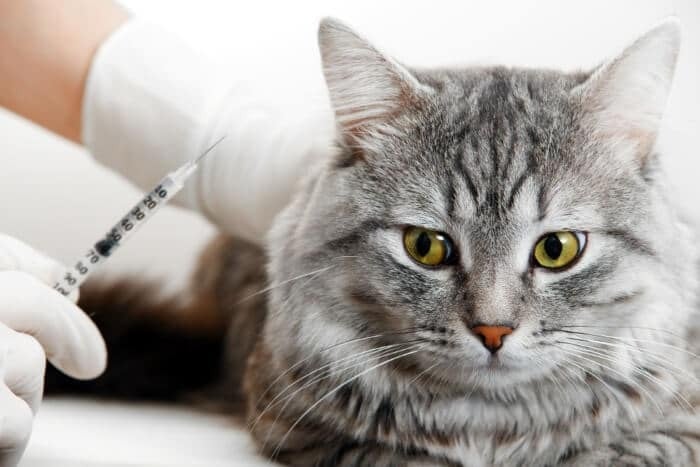
What are vaccinations?
Biological agents, containing small doses of inactivating microorganisms - which are part of the disease - stimulate the pet's immune system, giving it immunity against the disease and preparing it to fight diseases more quickly and effectively.
Why are vaccinations important?
The importance of vaccinations lies in their ability to prevent pets from contracting many diseases, such as parvovirus and tuberculosis. They also prevent the transmission of diseases between animals, as well as between animals and humans, and strengthen the pet's immunity.
At what age should vaccination be given?
- Basic cat vaccinations begin at 6 weeks of age for single cats (a single house cat) or at 4 weeks of age for colonies (a large number of cats in one place).
- Rabies vaccination at 3 months of age.
- Adoptional cats (without a specific date of birth) should have their vaccinations in accordance with the cat's vaccination certificate or start 15 days after the purchase date.
What are the vaccinations for cats?
Cat vaccinations are divided into two categories:
- Mandatory, and it is something that all cats must take.
- Optional, which not all cats should take.
Mandatory vaccinations for cats:
Mandatory vaccinations for cats are divided into two types:
- A/ Quadruple vaccination for cats:
It is a basic vaccination, called the quadrivalent vaccination because it protects cats from four deadly viral diseases. Therefore, it is considered an important vaccination, and neglecting it leads to many health problems during the cat's life stages.
The deadly diseases that cats may contract if they are not vaccinated are:
- Respiratory diseases (herpes): This is a virus that affects cats.
- Calci disease: which also affects the respiratory system.
- Feline leukemia (cat leukemia): This is a fatal disease that can be transmitted to humans.
- Panleukopenia (feline plague): This is a highly contagious disease caused by infection with the parvovirus.
- b) Rabies vaccination:
Feline rabies is an uncommon disease, but that doesn't mean prevention is unnecessary. Like other animals, cats can contract rabies, and it can be transmitted to humans through cat saliva. So make sure your cat gets vaccinated against feline rabies.
Optional vaccinations for cats:
Optional vaccinations for cats are divided into two types:
1- Worm pills
Therefore, you might need the seventh bird :
2- Final dose of quadrivalent vaccine
What are the required doses for protection against diseases?
It is necessary to consult the veterinarian about the appropriate vaccinations for the cat and to attend the appointment scheduled in advance for vaccination according to the cat's vaccination schedule to ensure the quality and effectiveness of the vaccination.
The cat needs two doses of triple or quadrivalent vaccination, 14 to 28 days apart, then one booster dose annually, except in the following cases:
- Cats under 4 months old need more than two vaccination doses with an interval of 14 to 28 days until they reach 4 months of age, then a booster dose annually.
- In cases of booster doses, the cat needs one booster dose, provided that the initial doses have been completed.
- If previously vaccinated cats go to cat shelters or cat hotels, it is preferable to give a booster dose of the quadrivalent vaccine within 3 months of the date of admission, regardless of the annual repetition date, to strengthen immunity.
- The vaccination against rabies consists of two doses with an interval of 6 to 12 months, then a booster dose annually or according to the laws of the country.
Therefore, you might need the seventh bird :
- Augmentin Al-Farabi is an antibiotic.
- Azitro antibiotic for dogs and cats from Avicin Labs, 8 capsules
Does vaccination provide complete protection against the disease?
Protection against diseases is complete after the initial doses are completed on schedule without delay, but some vaccinations cannot provide complete protection against the disease, but rather reduce the severity of the disease when infected, such as vaccination against herpes and calici.
What precautions are necessary before starting vaccination?
- Vaccination is given at 4 to 6 weeks of age to avoid infection.
- It is preferable to start the deworming program before taking the first dose of the vaccine.
- It is preferable to isolate the new animal in a clean place for 7 to 14 days to ensure that it is free of diseases before starting vaccination .
- It is preferable to isolate the cat from other animals until the initial doses of vaccination are completed to ensure full protection against diseases.
- If there is more than one cat in the house, group vaccination is preferred to avoid infection from the vaccination.
- The cat should undergo a medical examination by a veterinarian before starting the vaccination schedule .
- To ensure the quality and effectiveness of the vaccination, ask your veterinarian about the best vaccines available on the market.
Finally, we at Seventh Bird recommend you visit pet.code.clinic for the best vaccinations and the best treatment.