
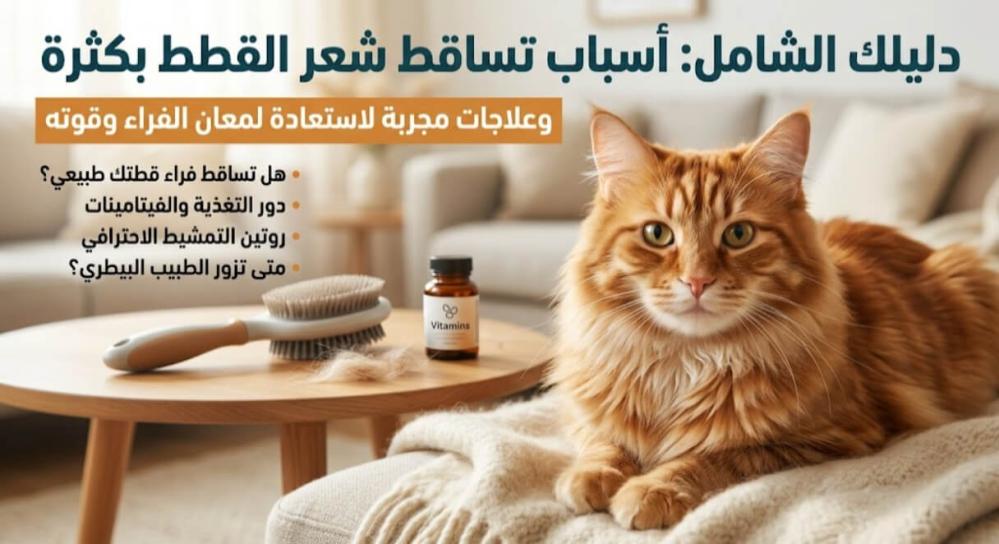
Cat owners know that their pet's fur will go wherever they go, and this is perfectly normal. However, investigating the causes of excessive hair loss in cats becomes essential when it exceeds normal levels. Whether the cause is seasonal or health-related, understanding the problem is key. Read on to learn how you can treat hair loss in cats using scientific methods and the best vitamins to strengthen your cat's coat .
What is normal hair loss in cats?
It is the process of renewing the covering that surrounds an animal's skin. In cats, shedding involves shedding fur to make room for new fur to grow inside.
This is a natural and necessary process. If it does not occur, there will be a problem, and if it occurs excessively, even if it results in bald patches, it may indicate a skin, behavioral, or nutritional problem that requires veterinary attention.
The first hair molting process in cats:
Kittens have a softer, finer, denser, wavy, and shorter coat than adult cats. This initial coat lasts for the first five to eight months of life. After this initial molt, the kitten's coat begins to change, a process that continues until it has fully grown and developed. Depending on the breed, the kitten completes its first molt, growing a longer, thicker, stronger, and shinier coat. Generally, only the appearance of the coat changes, not its color, although some kittens may develop a slightly darker coat as they mature.
During the first molting period, you may notice kitten hair all over the house, so it is important to start a good grooming routine and get them used to brushing and even bathing. Don't worry if you see a lot of kitten hair, this is perfectly normal and healthy - your kitten is growing.
What is abnormal hair loss in cats?
Micronutrient deficiency:
Even if a cat eats large quantities, a deficiency in certain elements can cause weak fur:
- Protein deficiency: Hair is made up of 90% protein, and if the diet is deficient in it, the body will stop supporting hair growth in order to provide protein to vital organs.
- Mineral deficiencies: such as copper and zinc, which are responsible for anchoring the hair follicle in the skin.
Hormonal problems (dysfunction):
Disorders in the endocrine glands lead to symmetrical hair loss on both sides of the body.
- Hyperthyroidism: very common in older cats, where the hair becomes dull and falls out easily.
- Increased cortisol hormone: Chronic stress or adrenal gland problems may lead to thinning of the skin and noticeable hair loss.
Environmental and food allergies (cat allergies):
Cat allergies are among the most complex causes, and they manifest in several ways:
- Food allergies: Allergy to a certain type of protein (such as chicken or sometimes fish) leads to skin irritation and hair loss around the neck and head.
- Contact dermatitis: an allergic reaction to household cleaners, a type of perfume, or even the "plastic" material in food containers.
- Flea lick allergy: Just one flea bite can cause a severe allergic reaction that makes the cat pull out its fur from the intense itching.
Parasitic and fungal infections:
- Ringworm: It is not a worm but a highly contagious "fungus" that causes circular patches completely devoid of hair, and is often transmitted to humans as well.
- Ear and skin mites: Microscopic parasites cause irritation that drives the cat to scratch constantly, leading to damage to the hair follicles and hair loss in the affected areas.
Psychological and behavioral factors (compulsive cleaning):
- Cats are very sensitive to change. When stressed, they resort to excessive self-grooming as a way to calm themselves.
- This behavior causes her to break the hair with her rough tongue, which looks like shedding, but it is actually manual hair removal due to anxiety about the presence of a new animal, a change in the location of the furniture, or even the absence of her owner.
How to treat hair loss in cats?
Treating hair loss in cats is not a one-size-fits-all solution, but rather a comprehensive protocol that starts from the inside out with nutrition and extends to the outside with grooming:
Nutritional therapy:
Nutrition is the first line of defense, and to achieve effective results, the focus should be on:
Foods rich in fatty acids:
For example, fish oil to repair the skin barrier.
The protein is easily digestible:
Eat protein-rich foods to build a strong hair follicle.
Supplements:
Using specific supplements speeds up the recovery process.
Health and hygiene care:
Parasite control:
Treatment for hair loss often begins with flea and tick repellent drops. Even if your cat is house-bred, parasites are a hidden cause of cat allergies and itching that leads to fur loss.
Moderate bathing:
Use a medicated shampoo containing oatmeal or aloe vera to soothe irritated skin. Avoid over-showering (once every month or two is sufficient) as excess water strips away natural oils, causing dryness and hair loss.
Professional cat grooming techniques:
The actual treatment for flyaway shedding is to brush cats using specialized tools (such as a Forminitor brush or rubber glove ) that reach the underside of the fur and remove dead hair from the roots before it falls out.
Controlling the surrounding environment:
Humidifying the air:
In dry climates or with frequent use of air conditioning, a cat's skin can become dry and its fur can fall out. Using a humidifier helps to keep the fur moisturized.
Bedding cleanliness:
Regularly washing cat beds with unscented products reduces skin irritation and hair loss caused by contact dermatitis.
Medical intervention:
If the excessive hair loss in cats is due to medical conditions, treatment includes:
Antihistamines:
If it is proven that the cause is an allergy of cats to dust or flower pollen.
Fungal treatments:
Use ointments or sprays containing antifungals if the cat is suffering from ringworm.
Behavioral therapy:
In cases of psychogenic baldness, calming pheromones such as wall spray devices are used to reduce the cat's stress and stop compulsive licking.
Jim Cat Squeezer for Cats to Relax:
- It contains ingredients that help cats relax in these situations and make their lives easier.
- Useful for situations where cats react very sensitively, such as a visit to the veterinarian.
- It supports relaxation and well-being in special situations.
- It was developed in collaboration with veterinarians.
- No added sugar, no artificial colors, no preservatives, no flavor enhancers
How does the Seventh Bird store contribute to the treatment journey for cat hair loss?
At Seventh Bird Store , we believe that healthy fur starts with smart care, so we have provided you with everything you need to effectively control this problem:
Specialized food selection:
In our store, we provide various types of dry and wet food specially designed to support skin and fur health, and enriched with high-quality proteins that prevent excessive hair loss in cats resulting from malnutrition.
N&D Skin & Coat Adult Cat Dry Food with Herring, Coconut & Quinoa
A formula specially designed for cats suffering from allergies, itching, or skin spots, while ensuring optimal nutrition.
- For skin and fur.
- Rich in Omega 3.
- Chicken-free.
the components:
Herring, herring oil, quinoa seeds, flax seeds, dried coconut, turmeric, salt, vitamin A supplement, vitamin D3 supplement, vitamin E supplement, vitamin B12 supplement, taurine, aloe vera gel.
Supplements and vitamins to strengthen cats' fur:
To ensure a radical treatment for the causes of excessive hair loss in cats, our store offers you the best vitamins to strengthen cat hair, including pure salmon oil and biotin pills that restore shine and strength to the fur from the first week.
Supravit Biotin Cat Food Supplement 100ml
Vitamins to strengthen cats' hair - a liquid veterinary food supplement given orally.
- It contains multivitamins, zinc and omega-3.
- It helps support immunity and healthy skin and hair.
- It strengthens hair follicles, prevents hair loss, and gives shine and radiance.
Supravit Malt Soft Anti-Hairball Cat Paste 100g
- Supravit Malt Soft Anti-Hairball Paste.
- It helps with easy digestion.
- It prevents the formation of hairballs.
- It contains 55% barley extract.
- Sugar-free.
- An excellent nutritional supplement for adult cats.
Professional grooming tools:
Our supplies section includes an innovative range of cat grooming tools, from knot-breaking combs to dead hair removal gloves, which help you deeply clean fur and reduce flyaways in the home by up to 90%.
Pet hair removal comb
- A precise blade helps to remove dead hair with high efficiency.
- It significantly reduces hair loss with regular use.
- Suitable for cats and dogs with short, medium or long fur.
- Comfortable, non-slip handle, easy to control while combing.
- Durable, long-lasting design.
Allergy and hygiene solutions:
We offer gentle, medicated shampoos that help soothe cat skin allergies, as well as sprays to protect against parasites, which are a major cause of hair loss in cats.
Aloe Plus Anti-Allergy Cat Shampoo Spray 250ml
- The innovative formula allows the shampoo to be used even on cats with extremely sensitive skin.
- Its hypoallergenic formula is enriched with carrot and tree aloe vera, giving the fur a natural shine and vitality.
- Aloe Plus Shampoo Spray with its packaging provides a large quantity of product and ensures even distribution over the entire body of the pet with just one hand.
- It's not Java shampoo, but a real classic shampoo in spray form.
Conclusion:
A thick, glossy coat is a sure sign of your cat's health and happiness. Understanding the causes of excessive shedding in cats is the first step towards a solution, but consistent care is the real secret. By incorporating a diet rich in vitamins to strengthen your cat's coat and adhering to a regular grooming schedule, you'll notice a significant difference not only in your pet's appearance but also in the cleanliness of your home. Always remember that early diagnosis of any cat allergies saves you a lot of trouble and makes treating hair loss in cats simpler and easier.
Frequently asked questions:
- Does brushing cats daily reduce hair loss at home?
Yes, absolutely. Brushing cats daily helps to catch dead hair before it falls onto the furniture and also stimulates blood circulation in the skin, promoting stronger hair growth that is less prone to falling out.
- When should I be concerned about the causes of excessive hair loss in cats?
You should be concerned and see a veterinarian if you notice patches of hairlessness (baldness), or if the shedding is accompanied by redness and flaking, as these may be signs of a fungal infection or some type of cat allergy.
- What are the best vitamins to strengthen cats' fur and prevent hair loss?
Vitamins rich in omega-3 fatty acids, biotin, and vitamin E are considered the best. These ingredients nourish the hair follicles from within and moisturize the skin, thus accelerating the treatment of hair loss in cats.
- Could a change in food type be a cause of allergies and hair loss in cats?
Yes, some cats are allergic to certain ingredients such as grains or some types of protein. In this case, treating the shedding requires switching to hypoallergenic (allergy-free) food .
- Do hair loss rates differ between cat breeds?
Yes, it varies depending on the type, density, and undercoat of the fur. While long-haired cats are generally thought to shed more, some short-haired breeds can surprise you with the amount of hair they lose.
Read more articles from The Seventh Bird about:
Why do cats sleep in the sand? And how can this behavior be addressed?
Symptoms of toxoplasmosis: Your comprehensive guide to causes, treatment, and prevention
How many hours do cats sleep and when should you worry?
Cat vaccination schedule in Saudi Arabia 2026: Types, dates, and prices
The best vitamins for cats in 2026: A comprehensive guide to immune and coat health