
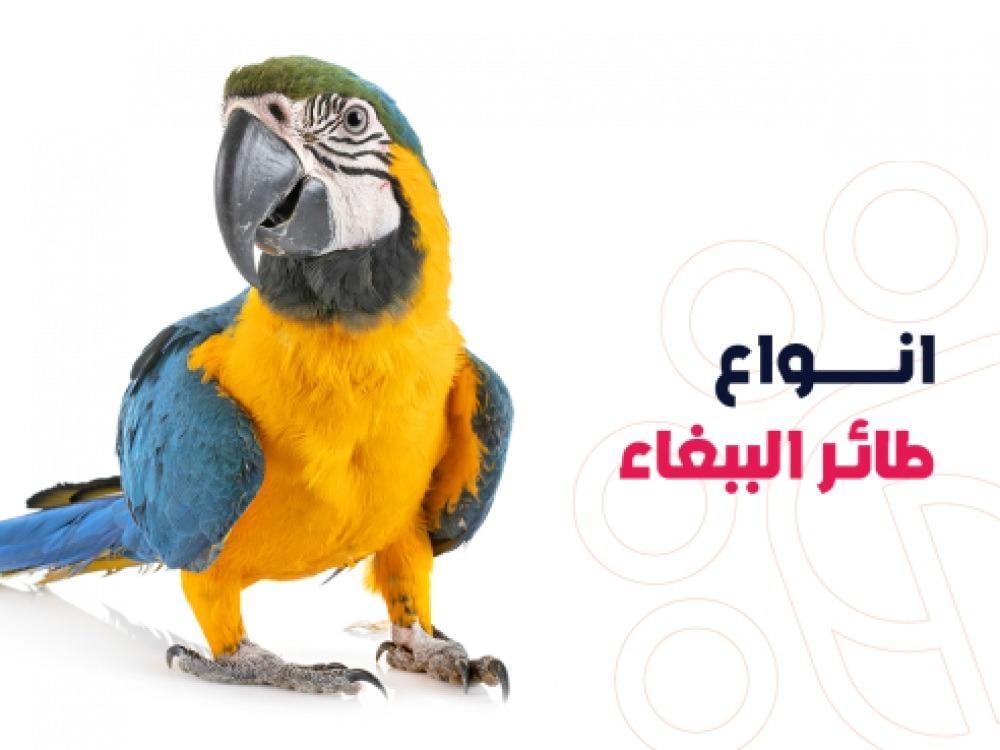
Parrots are among the most intelligent and beautiful birds, and are beloved companions for many thanks to their ability to mimic sounds and their vibrant colors. There is a great diversity of parrot species, each with its own dietary needs and care requirements.
Raising a parrot, besides being one of the most beautiful experiences in life, is a great responsibility that requires care, attention, and continuous follow-up. Raising a parrot depends on three basic steps: a suitable diet for the type of parrot, health care and personal hygiene, and finally, good attention to entertainment and playtime. The parrot is a playful creature that cannot be confined in a small cage. It needs ample space and to be provided with entertainment and mental stimulation toys in order to maintain a happy, healthy, ideal parrot that brings joy to your home.
In this article you will learn everything you need to know about parrots, as well as fun and interesting information.
What are the best types of parrots?
Parrots are one of the most diverse and complex orders of birds, comprising over 350 species found throughout the world. These species vary in their biological characteristics, behaviors, and natural habitats, making them a fascinating subject that prompts many to learn about the most popular species that can be kept as pets.
African Grey Parrot:
- Gray: As the name suggests, it is predominantly gray, but not uniformly so. The feathers on the body are in varying shades of gray, with lighter edges that give it a fine, scaly appearance.
- Bright red tail: This feature is prominent in the species known as the African Congo Grey, where its tail is bright red, creating a beautiful contrast with the grey color.
- The black and strong beak: Its beak is black in color, very strong and designed to crack hard nuts and seeds.
- The intelligent eyes: Adults have pale yellow eyes, while juveniles have dark eyes. The area around the eye is featherless and shows smooth white skin.
- Medium size: It is considered a medium-sized parrot, ranging in length from 28 to 33 cm.
Behavioral and personality traits:
- Exceptional intelligence: This is by far the most important trait. The African grey parrot is ranked as one of the smartest birds in the world. It has the ability to solve problems, understand cause and effect concepts, and even use words in their correct context.
- Amazing linguistic ability: This talking parrot is not just a mimic of sounds, but has a remarkable ability to connect words with their meanings. It can build a vocabulary of hundreds of words and use them to communicate with its owner. It also accurately imitates household sounds (such as the telephone ringing, the alarm clock, and a human cough).
- Sensitivity and emotionality: This parrot is extremely sensitive and needs a stable and secure environment. It can be negatively affected by sudden changes or stress in the home, which may lead to behavioral problems such as feather plucking.
- Social and bonding nature: A flock bird by nature, it forms a very strong bond with one or more family members. It needs intensive daily social interaction (several hours) otherwise it becomes bored and lonely.
- Caution and deliberation: With strangers, this parrot is wary and suspicious. It doesn't accept new people easily and may take a long time to build trust.
- The tendency towards selectivity: The grey parrot often chooses one person in the family to be its favorite, and may show indifference or hostility towards others.
Special care features:
- High Stimulation Needs: Due to his sharp intellect, he needs plenty of stimulating games, puzzles, and activities that challenge his mind. Without this stimulation, he will inevitably get bored. Seven Bird Wooden Stand with Bird Swing
- Messy: It tends to throw food and scatter small pieces everywhere, so it needs a large cage and regular cleaning of the surrounding area.
- Fine dust production: African grey parrots produce a fine white powder (feather dust) to help care for their feathers. This may be a problem for people with respiratory allergies.
- Longevity: This is a long-term commitment, where they can live from 40 to 60 years in captivity with proper care.
- The price of the parrot is among the highest of all parrot species due to its exceptional intelligence and linguistic ability.
Macaw parrot:
Physical characteristics:
- Large size: One of the best types of parrots, the macaw is most famous for its large size, making it one of the largest parrots in the world. Some species, such as the hyacinth macaw, can reach 100 cm in length from head to tail.
- A parrot with stunningly vibrant colors: It boasts dazzling plumage that combines the colors of the rainbow, such as blue, yellow, red, green, and gold. Each species has its own unique coloring.
- Long tail: It has a long, pointed tail that gives it an elegant and attractive appearance.
- The extremely powerful black beak: Its beak is huge and incredibly strong, easily cracking open coconuts and hard nuts. The facial area is featherless in most species, revealing white skin with thin stripes of dark feathers.
- Bare face: Most macaws have patches of bare skin on their face, which may turn pink or red when the bird is excited.
Behavioral and personality traits:
- Social and playful: Macaws are naturally social creatures that love to play and interact with their owners. They need plenty of attention and mental and physical stimulation. A colorful toy with two bells for the birdcage from Seven Bird.
- Intelligent and able to learn: He is highly intelligent, able to learn many words and tricks, and solve puzzles to get rewards.
- It is one of the best types of parrots for learning and imitating sounds.
- A very loud voice: This is one of its most prominent characteristics! It possesses a very powerful voice that can be heard from a great distance. In the wild, it uses this voice to communicate with members of its herd. This could be a problem in apartment buildings.
- Emotional and attached to its owner: It forms very strong and emotional bonds with its owner, and can suffer from separation anxiety if neglected.
- Curious and chewing: Because of its strong beak, it loves to chew everything from furniture and wires to toys. It needs to be provided with sturdy and safe toys to chew on constantly.
- Love of showing off: He likes to be the center of attention, and often enjoys speaking and performing tricks in front of an audience.
Special care features:
- Huge space requirements: Due to its large size and long tail, it needs a very large cage (a bird palace, not just a cage). Ideally, it should have its own dedicated, secure room. A wooden bird stand with two stainless steel cups is included. Nobleza birdcage 47.5*36*68 cm
- Special diet: It does not live on seeds alone, but needs a varied diet of fresh fruits and vegetables, large nuts and specialized powder.
- Very long lifespan: It is a lifelong commitment, where they can live from 50 to 80 years in captivity.
- High costs: The price of a parrot is very high, and the costs of caring for it are also high (large cage, food, specialized veterinary care).
- Constant need for bathing: He loves to bathe and spray with water to maintain the health of his dazzling feathers.
What are the most common types of macaw parrots?
- • Sapphire Macaw: The large blue one, the most expensive.
- • Scarlet Macaw: Red, blue, and yellow, the most famous.
- • Blue and gold macaw: A beautiful combination of blue and gold.
- • Green-winged macaw: Similar to the scarlet macaw but with green wings.
- • Mini Macaw: Similar to the yellow-faced macaw, it is smaller in size and relatively less noisy.
Cockatiel parrot:
Physical characteristics:
- Small to medium size: The cockatiel is considered small to medium in size, measuring about 30-33 cm from its head to the tip of its long tail.
- Bright orange cheeks: Its most distinctive feature is the bright orange or red patch on its cheeks, which forms the rosy hue that gives it a cute appearance. [Brevo Stand - Multi-Tier Toy for Birds and Parrots]
- The distinctive crest or crown: Cockatiels have a set of long feathers on their heads that resemble a crown or haircut, which they can move up and down to express their feelings (curiosity, fear, relaxation).
- Long tail: Its long tail makes up about half the length of its total body, giving it balance and elegance in flight.
- A colorful parrot with several bright colors: It is available in several beautiful color mutations, the most famous of which are the natural gray (gray body and yellow head), the albino (completely white), the lutino (completely yellow with orange cheeks), and the pebble (spotted).
Behavioral and personality traits:
- Sociable and friendly: A flock bird by nature, it enjoys the company of humans or other birds of its kind. With daily interaction, it becomes very friendly and loves to perch on its owner's shoulder.
- Relatively quiet: its voice isn't loud or annoying like some larger parrots. Its whistling and squawking are generally acceptable in houses and apartments.
- The ability to imitate and whistle: It is not considered a talking parrot, and although it is not as eloquent a speaker as the African Grey, it has a good ability to learn to imitate, especially whistling tones (such as the telephone ringtone), and some simple words, especially the males.
- Curiosity and play: This curious bird loves to explore and play. It needs simple toys to keep it happy and occupied.
- Easy to domesticate: It is one of the easiest birds to tame and domesticate, especially if obtained as a chick. This is one of its most important characteristics that has made it very popular.
- Emotional: He can express his feelings through head movements, tone of voice, and body language.
Special care features:
- Ideal for beginners: Cockatiels are the perfect choice for people who want to raise a bird for the first time, due to their ease of care and calm temperament.
- Relatively inexpensive: The price of the parrot is low compared to larger parrots like macaws and is considered very reasonable, in addition to the fact that the cost of caring for it is also considered lower.
- Simple requirements: It doesn't need a very large cage, but the larger the cage, the better for its comfort. Its diet consists mainly of cockatiel seeds, millet, and fresh vegetables and fruits.
- Good lifespan: With good care, it can live from 15 to 25 years on average, making it a pleasant companion for a long time.
- Relatively clean: not a producer of fine dust as much as the grey parrot or cockatoo.
Budgie parrot:
Physical characteristics:
- Small size: A very small parrot, only 15 to 18 cm long, making it easy to keep in any space.
- Bright and varied colors: Budgies are colorful parrots available in an amazing array of colors and mutations (over 100 colors!) such as blue, green, yellow, white, gray, and purple.
- Distinctive neck patches: Adult budgies have distinctive round black patches on their throat and neck. Stripes on the head and wings: Juveniles and natural-colored budgies have distinctive black stripes that run from their beak to the back of their head and along their wings. These stripes disappear as the bird matures.
- The small strong beak: Its beak is hooked and strong for its size, ideal for peeling seeds.
Behavioral and personality traits:
- Extremely active and playful: the budgie is a ball of energy! It loves to fly, jump, and climb. Watching its constant movement is a source of entertainment.
- Social and herd-loving: It likes to live in flocks. If you keep one, it will bond strongly with you. If you keep two, they will bond with each other and put on entertaining social displays.
- Easily tamed and domesticated: With a little patience and training, the budgie becomes very friendly, loves to sit on a finger, and plays outside the cage.
- The ability to mimic and talk: Despite their small size, budgies have an amazing ability to learn words and whistle! Budgies are the smallest talking birds in the world. Males are usually more adept at talking than females.
- Curious and clever: He loves exploring everything around him and quickly learns simple tricks and how to unlock games.
Special care features:
- Ideal for beginners and children: This is one of the best types of parrots for children and beginners. It's the perfect bird to start your bird-rearing journey due to its ease of care and friendly nature. Brevo Stand Bird & Parrot Toys
- Very low cost: The price of the parrot is very low, and the costs of its food and supplies are very reasonable.
- It doesn't need much space: a cage of a suitable size is enough, but daily access to it for flying is essential for its health and happiness.
- A simple diet: based primarily on a mixture of budgie seeds, millet, and fresh leafy greens.
- Reasonable lifespan: They live an average of 5 to 10 years, and can reach 15 years with excellent care. This makes them a medium-term commitment, not as long-term as larger parrots.
The Seventh Bird Store offers the best types of parrots (white parrots, colored parrots) and also provides everything your bird needs in terms of stimulating toys and cage supplies:
Seven Bird birdcage with feeders and perches, 28x22x16cm
Basic components and nutritional requirements for parrots:
A modern diet for parrots should be based on the following components:
Commercial granules:
The ratio: It should represent 75% to 80% of a parrot's daily food intake for large species (such as African Greys and Macaws), and about 60% - 80% for small species (such as Cockatiels and Budgies).
Importance: The pellets have been developed to meet all of the birds' nutritional needs in a balanced way, and help prevent the bird from choosing unnutritious favorite foods (such as only sunflower seeds).
Fresh vegetables and fruits:
The ratio: represents approximately 20% to 25% of the daily diet.
Vegetables: Focus should be placed on dark leafy greens (such as spinach, kale, arugula) and colorful vegetables (such as carrots, cooked sweet potatoes, bell peppers, broccoli, and zucchini).
Fruits: These can be served in limited quantities as they contain natural sugars. Examples include apples (without seeds), bananas, grapes, berries, and mangoes.
Tip: They should be washed thoroughly and cut into small pieces, and not left in the cage for more than two hours to avoid spoilage.
Seeds and nuts (in very limited quantities):
Importance: Used as simple treats or additions, as they are high in fat and low in nutrients compared to cereals.
The ratio: The proportion of seeds should be very small in the parrot's daily food intake, especially sunflower seeds and peanuts, which the bird prefers.
Special dietary requirements depending on the parrot species:
Providing a balanced and varied diet is vital for the health and happiness of all parrot species. While all species share some basic requirements, there are slight differences to consider depending on the size and type of parrot. One of the most important steps to remember in parrot care is offering cuttlebone as a treat. (For example, a 6-piece cuttlebone treat with a small fixative from Brevo is available.)
To maintain healthy nails and beak, it is rich in calcium, which is essential for the growth of parrots.
African Grey Parrot:
Fruits (pomegranate, grapes, and oranges)
Grizo Fruit Parrot Nutrient Food 12.5kg
Fresh vegetables, corn, and nuts in moderate quantities
African Grey parrots need a diet rich in calcium.
Macaw parrot:
Large nuts and seeds (due to its size and powerful beak), such as pecans, walnuts, and Brazil nuts. Various fruits and vegetables.
Wimo food for large and medium parrots, 10kg
It needs a diet that is slightly higher in fat compared to the African Grey Parrot, and nuts are a good source of that.
Cockatiel parrot:
Pellets formulated for small/medium-sized birds, canary seeds, millet, oats. Vegetables (such as carrots, spinach). Seeds should not exceed 10% of the diet of some pet cockatiels prone to obesity.
Goldwings Nutritious Food for Cockatiels and Rose-ringed Parakeets 1kg Gold Wings Treats for Cockatiels and Rose-ringed Parakeets, Fruit Sticks, 60g
Budgie parrot:
Special grains (millet, canary seed), fresh vegetables (such as carrots, spinach, arugula).
The pellets (granules) are the base. Fruit is served as a snack and in very small quantities.
Vitacraft balanced food for budgies
1kg Gold Wings Budgie Treats Honey Sticks 60g
Foods and toxic substances to avoid for parrots:
Extreme caution must be exercised when feeding parrots randomly, as some foods can cause severe illness and even death. Learn about these foods:
Avocado:
It contains a toxic substance called persin. It is highly toxic to all types of birds; it can cause respiratory distress, heart failure, and sudden death.
Seeds and pits of some fruits:
Examples include apple and pear seeds, and apricot, peach, and cherry pits. These contain cyanide, which is released when ingested. Fruit should be served only after all seeds and pits have been removed.
Chocolate:
It contains theobromine and caffeine. It can cause hyperactivity, increased heart rate, tremors, seizures, and death.
Caffeine:
It is found in coffee, tea, and soft drinks. It causes an increased and irregular heart rate, hyperactivity, and death.
Onions and garlic:
They contain sulfur compounds that can cause anemia (hemolytic anemia) and liver damage in large quantities.
All forms of onions and garlic (raw, cooked, or dried) should be avoided.
Mushrooms:
Some types of mushrooms can cause liver failure, and it is best to avoid all types of mushrooms as a precaution.
Coriander:
It contains a substance that interferes with calcium absorption.
It may not be directly toxic, but it is harmful in the long run.
Tips to help you keep a healthy and happy parrot:
Mental enrichment and avoiding boredom:
Parrots in the wild spend most of their time searching for food, and when they are not doing that in a cage, they become bored and anxious.
Turning meals into a game:
Food Hunt Game: Don't put all the food in one container. Hide some seeds or fruit in different places inside the cage or in the designated food hunt box.
Smashing games: Wrap a small piece of your favorite food in a piece of uncolored cardboard (such as a clean kitchen towel or an empty toilet paper roll). Your parrot will enjoy smashing the paper to get to the treat.
Providing destruction games:
Parrots love to chew and destroy. Provide them with untreated wood (such as branches from safe fruit trees like apple trees), balls of paper, or small unpainted cardboard boxes to satisfy their destructive instincts. This will reduce the likelihood of them damaging your furniture.
Nobleza is a hanging bird toy made of wood and ropes.
Taking turns with the games:
Don't leave all the toys in the cage all the time. Rotate the toys (remove some and add others) weekly to maintain novelty and excitement and prevent the bird from getting bored.
Communication and relationship building; parrots are highly social creatures and need daily interaction.
Positive training:
Use small treats (like a piece of its favorite nut or seed) to teach your bird simple commands such as come, climb, or even to teach it to talk. This strengthens your bond and stimulates its intelligence.
Avoid punishment: Yelling or spraying water as punishment is ineffective and will only increase the bird's fear and damage the relationship. It's better to ignore bad behavior (like yelling) and reward calm behavior.
Allocate cage time:
Sit next to the cage and read aloud or speak softly. This helps the bird get used to your presence and voice in a safe and comfortable environment, especially when raising shy parrots like African Greys.
Dancing and singing:
Many parrots love music. Play calming or upbeat music, sing, or dance. Their interaction with you in these activities strengthens your bond and provides genuine enjoyment.
Environment and health:
Sunbathing and bathing:
Sun: Exposing the bird to direct sunlight (without a glass barrier because glass blocks beneficial rays) for a short period in the early morning or before sunset helps it produce vitamin D, which is necessary for calcium absorption.
Bathing: Most birds benefit from a spray of lukewarm water or a shallow dish for regular bathing. This helps maintain healthy feathers and skin.
Seven Bird Easy-to-Assemble Bird Bathing Box Made of High-Quality Plastic
Cage dimensions and bars:
Make sure the cage is large enough for the bird to spread its wings and fly short distances inside. Nobleza birdcage, 60*42*41 cm, white.
For climbing species (such as African Grey parrots and macaws), make sure the cage bars are horizontal to facilitate climbing.
Daily and quick check-up:
Set aside one minute a day to observe the bird for any abnormal signs: Is it eating as usual? Are its feathers clean? Are its droppings normal? Early detection of any change is key to maintaining the bird's health.
Frequently asked questions:
What is the appropriate size for the cage?
The cage should be large enough to allow the bird to fully extend its wings without touching anything and to move up and down freely. The larger the cage, the better the bird's psychological well-being.
Where should the cage be placed?
In a busy area of the house (living room or family room), but not in a direct draft or next to a very sunny window. One side should be against a wall so the bird feels secure.
Should the cage be covered at night?
Yes, this usually helps to ensure the bird gets a peaceful sleep (10-12 hours), and protects it from any light or noise disturbances.
How often should the cage be cleaned?
Daily: Change the bedding and clean the water and food containers. Weekly: Thoroughly clean and disinfect the cage, and replace any dirty branches or toys.
How do I deal with a bird "biting"?
Biting is usually caused by fear, a feeling of being threatened (especially during mating season), or a misunderstanding. Don't punish him. Instead, calmly ignore the biting, change the environment, and use positive reinforcement to teach him that biting doesn't get him anywhere.
Are seeds alone enough for the bird?
No, feeding a parrot seeds alone should not lead to severe nutritional deficiencies (especially vitamin A and calcium) and obesity. Pellets should be the main component (60-80%), and fresh fruits and vegetables should be offered daily.
How do you know if my bird is sick?
Birds instinctively hide their illness. Signs of illness include: extreme lethargy or sitting with puffed-up feathers for a long time, a change in the color or consistency of droppings, loss of appetite, difficulty breathing, or discharge around the nose/eyes.
Can prostitution live without a cage?
Yes, a parrot can live outside its cage as long as a secure base and basic alternative facilities are provided.
In addition to the good and intensive training of the prostitute that ensures his good behavior while he roams freely in the house, especially with children present.