
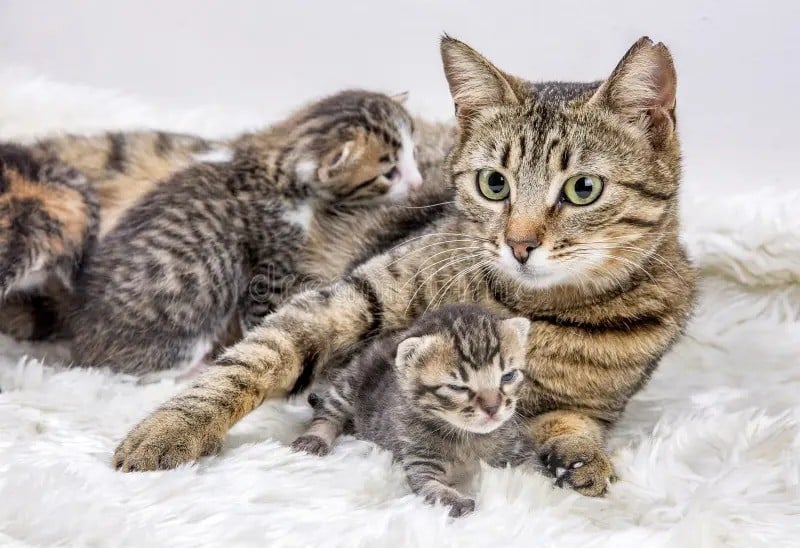
Best food for lactating cats
There are balanced foods specifically designed for nursing mothers. If your cat is accustomed to dry food , there are excellent cat foods available. Manufacturers have ensured that the diet is balanced and healthy. Additionally, these kibbles contain special lactation-stimulating ingredients. They also contain increased amounts of vitamins and are rich in proteins essential for the complete nutrition of newborn kittens.
If the animal was on a normal diet before pregnancy, you should continue to give it its usual food. For the first two or three days, the food should be liquid or soft enough for the cat to eat without difficulty.
Feeding kittens colostrum requires adding warm milk products or fermented dairy products to their diet. To stimulate their appetite, the food should be served warm.
After birth, the animal is fed in small portions, and the number of meals increases to 5 times a day.
Therefore, we have allocated the seventh bird for your cat:
Nutrition during breastfeeding
Providing adequate calories is essential for sufficient milk production and to prevent excessive weight loss in the cat. Water intake is also vital for her body to produce enough milk. Cats with large udders or low energy reserves at the time of birth are at increased risk of malnutrition during lactation.
The size of the cat is the biggest determining factor for the amount of food required.
Therefore, we have allocated the seventh bird for your cat:
- Canvit Multivitamin Cat Food Supplement
- Nutrimin Cat Food Supplement with Minerals and Vitamins from Canvit
What should a nursing cat eat?
A nursing cat's diet must be nutritionally balanced and provide her with the necessary nutrients to produce milk for her kittens. It is important for her to consume high-quality protein, fats, vitamins, and minerals to ensure she remains healthy and can produce enough milk for her litter.
Here are some guidelines on what to feed your lactating cat:
1- Cat food:
High-quality cat food is the best choice for lactating cats. These foods are formulated to meet the increased nutritional needs of lactating cats and provide the necessary nutrients for milk production.
Therefore, we have allocated the seventh bird for your cat:
2- Dates:
Wet food can be a good option for lactating cats, as it provides extra moisture and can help prevent dehydration.
Plenty of water: A nursing cat needs to drink plenty of water to stay hydrated and produce enough milk for her kittens. Fresh, clean water should be available at all times.
Therefore, we have allocated the seventh bird for your cat:
3- Frequent small meals:
A nursing cat should be fed small meals frequently throughout the day. This can help her maintain her energy levels and keep up with the demands of her kittens.
Therefore, we have allocated the seventh bird for your cat:
- Befar Cat Food Supplement
- Canvit Multivitamin Cat Food Supplement
- Nutrimin Cat Food Supplement with Minerals and Vitamins from Canvit
- Canvit Probiotic Cat Food Supplement for Healthy Digestion and Treatment of Diarrhea in Cats
- Solid Gold Sea Mill Multivitamin Supplement for Dogs and Cats to Support Skin, Gut, and Immune Health
4- Avoid giving cow's milk:
Cow's milk is not a suitable substitute for lactating kittens and can cause gastrointestinal upset and diarrhea in cats.
Therefore, we have allocated the seventh bird for your cat:
- Befar Lactol Milk Substitute for Cats
- Royal Canin Milk with Bottle for Kittens
- Jana milk powder for babies, rich in vitamins and minerals
- EGY SENSE Sterilized Goat Milk for Kittens and Small Dogs
- Zovital dried milk for kittens is rich in minerals, vitamins and oils
Because we care about your comfort, we have provided you with the seventh bird :
How often does a nursing cat eat?
First week of breastfeeding: Maintenance dose x 1.5
Second week of breastfeeding: Maintenance dose x2
Weeks 3 and 4 of breastfeeding: Maintenance dose x 2.5-3
Week 5 of lactation onwards: Start slowly to reduce the nursing cat's intake of solids along with the kitten's intake of more solids.
What foods increase milk production in cats?
There are several types of food that can help increase milk production in lactating cats. These include:
1- High-quality cat food:
Feeding your lactating cat high-quality cat food specifically formulated for lactating cats can help ensure she gets the nutrients she needs to produce enough milk for her kittens.
Therefore, we have allocated the seventh bird for your cat:
2- Foods rich in protein:
Protein is essential for milk production, and feeding your cat a high-protein diet can help increase milk supply. Good sources of protein include chicken, turkey, or fish.
Therefore, we have allocated the seventh bird for your cat:
- Jim Cat Wet Cat Food with Chicken and Carrots
- Butcher's Wet Cat Food, Delicious Beef Dinner
- Phylane Naturals Freeze-Dried Cat Food with Chicken and Lamb
3- Foods high in fat:
Fats provide energy and can help increase milk production in lactating cats. Good sources of healthy fats include cooked egg yolks, fish oil, and small amounts of butter.
Therefore, we have allocated the seventh bird for your cat:
- Catit Chicken & Fish Nibbley Wraps Cat Treats
- Morando wet food for neutered cats with fish and shrimp
- Monello dry cat food with turkey and salmon
4- Foods rich in calcium:
Calcium is important for milk production, and providing your lactating cat with calcium-rich foods can help ensure she has enough to produce milk. Good sources of calcium include dairy products, such as plain yogurt and cottage cheese.
Therefore, we have allocated the seventh bird for your cat:
- Jim Cat Cheese Cat Treats
- EGY SENCE Silver Goat Milk Fortified with Calcium for Dogs and Cats
- Jim Cat Rewards for Cats: A delicious mix of milk, cheese, and yogurt fillings
How do you feed a nursing cat?
If you were able to maintain your cat's weight by feeding her at specific times during pregnancy, you can continue this regimen during lactation. However, the energy expenditure of nursing cats will be significantly higher than during pregnancy. With this in mind, you should also consult your veterinarian to ensure your cat and kittens are receiving a healthy diet. At this stage, again, follow a balanced diet in terms of fats, protein, calcium, carbohydrates, and nutritious cat food.
You can always ensure your cat has enough food in their food bowl and plenty of fresh drinking water nearby. However, you can supplement their diet with wet foods to encourage them to drink more water.
In addition to a proper feeding program, it's crucial that both the mother and her kittens feel at ease. By providing her with a safe, calm, and loving home, you can help her experience pregnancy and breastfeeding more smoothly. By carefully observing your cat's behavior, you can seek advice from breeders and your veterinarian on how to handle the kittens . Some mothers may be more jealous, while others may go to great lengths to show you their offspring. In such cases, you should respect the mother's choice and always be sure to support her.
General feeding advice for lactating cats
1- Once the kitten is three weeks old, it is advisable to feed the kitten separately to prevent the kittens from eating her food.
Therefore, we have dedicated to the seventh bird :
- Cheezer wet food for kittens with tuna in jelly
- Kit Kat wet food for kittens with chicken in gravy
- Dry kitten food with chicken and turkey for healthy growth and development from Britt
2. Always have fresh water available. We recommend using stainless steel, glass, or ceramic bowls, as plastic can prevent cats from drinking.
Because we care about your comfort, we have provided you with the seventh bird :
- Seven Bird stainless steel double dinner plate with base
- Seven Bird Cat and Dog Food and Waterer, Plastic Base with Two Stainless Steel Bowls
3- By the time kittens are 6 to 7 weeks old, the amount of food a kitten eats should not exceed 50% of its normal nutritional requirements.
4- Cats lose their ability to digest lactose (milk sugar) shortly after weaning, and consuming it can cause diarrhea.
When does a cat start eating after giving birth?
After giving birth, the mother cat may not eat for the first few hours, as she focuses on caring for her kittens. However, it is important for her to eat and stay hydrated in order to produce milk.
Typically, a mother cat will resume eating within the first 24 hours after giving birth. It's important to offer her small, frequent meals of high-quality kitten food specifically formulated for nursing kittens. Wet food can also be a good option as it provides extra moisture and can help prevent dehydration.
It's important to note that nursing cats have increased nutritional needs, and it's essential to feed them a balanced and nutritionally complete diet to ensure the health of both mother and kittens. If you have any concerns about your nursing cat's diet or nutritional needs, it's best to consult your veterinarian.